


 Noticias en español

This month, Corfo awarded the ITL to the ASDIT consortium, formed by Corporación Alta Ley together with 11 universities, including Universidad de Chile. The Faculty of Physical and Mathematical Sciences of the Casa de Bello -through the Energy Center, the AMTC and the CMM- will have the mission of convening the existing capacities of the campus, as well as creating alliances with other university, technological and business institutions to develop projects on energy with clean technologies.
After the controversial awarding of the Clean Technologies Institute (ITL) to a foreign consortium in 2021, which included the process passing through the Supreme Court and, finally, the annulment of Corfo’s tender to promote solar energy, sustainable mining and advanced lithium materials, this project was finally re-awarded to ASDIT (Asociación para el Desarrollo del Instituto Técnológico, Association for the Development of the Technological Institute), a consortium led by national institutions, which from the beginning had received the best evaluation.
This month, Corfo confirmed that the association, which includes among its members the Corporación Alta Ley together with 11 universities (Católica del Norte, de Antofagasta, Católica de Chile, Católica de Valparaíso, de Chile, de Concepción, de Santiago de Chile, de Talca, de Tarapacá, Federico Santa María and Adolfo Ibáñez), as well as the international centers CSIRO and Fraunhofer and a series of related companies and institutions, will be in charge of developing the institute.
The ITL is part of the national strategy to develop clean energy to achieve carbon neutrality by 2050. It involves an investment of close to US$125 million over the next decade.
“Our initiative sought from the beginning to boost regional and national development, and to implement and push for the industrial scaling of new technologies to have sustainable lithium and copper mining linked to their territories,” said ASDIT in a statement. The association stressed that these technologies are focused on the development of green hydrogen and its derivatives, energy storage and circular economy, based on a model that promotes cooperation and competition, through co-participation in industrial technology pilots to be implemented in the Antofagasta Region.
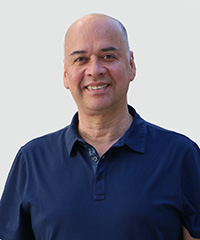
Alejandro Jofré, associate researcher of the CMM.
“The ITL is a great opportunity to generate development in new processes, methodologies and technologies. Models that allow us to consolidate the country as a leader in the mining of the future, green and digital, and in the innovative solar energy industry with local development. The ITL has a strong regional component in Antofagasta. The laboratories will be built in that region, as will a good part of the pilots. In that sense, it is also a great opportunity to transform the Antofagasta Region into a pole of technological development and innovation, says Alejandro Jofré, associate researcher at the Center for Mathematical Modeling (CMM), academic of the Department of Mathematical Engineering at the University of Chile and member of the ITL Executive Committee.
The dean of the Faculty of Physical and Mathematical Sciences (FCFM), Francisco Martínez, who represents the Rector of the U. of Chile, Rosa Devés, on the board of directors, assures that the participation of Chilean universities leading the ITL is of enormous relevance, since it allows a clear route to be traced between scientific production and applied research, its transfer and the generation of new technologies. “This route is highly strategic for the country’s development. The absence of this synergistic integration has prevented or at least hindered the country’s technological development, leaving it limited to the extraction of natural resources and importation of technology. It is the latter that captures the added value. This situation can be reversed with the creation of the ITL, which due to its scale in terms of investment of resources and participation of universities and technological institutes, both national and international, allows the formulation of projects on a global scale”, he points out.
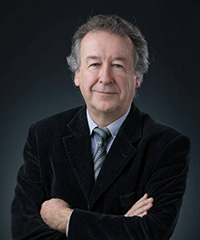
Francisco Martínez, dean of the FCFM, U. de Chile.
The FCFM of the Universidad de Chile will have the mission of convening the existing capacities of the University to conceive and formulate technological development projects in the field of clean technologies. In addition, it will seek the creation of alliances with other university, technological and business institutions to develop projects associated with the generation of solar energy with various technologies; the transport of electric energy, from generation to final consumption, with various options; and the growth of electromobility and engine conversion, the dean explains.
“For the FCFM it is a great organizational and intellectual challenge. Organizational, because it requires moving towards contributing to highly advanced technological innovation in the production line, with multi-faculty organizational structures that do not neglect basic and applied research and, of course, teaching. For this, we see an important role for the centers of the FCFM and other units. Intellectually, because the development of advanced technology always requires contributions in the conception of projects and in the solution of technological development knots in which basic and applied science can contribute”, he emphasizes.
“In both the mining and energy areas, the Faculty has a group of academics, engineers, postdocs and leading graduate programs in the country, which added to the activity in artificial intelligence, data science and mathematical modeling, will allow us to face with vigor and innovative actions the challenges posed in the ITL, which we group into five technology programs: Sustainable Mining, Hydrogen, Solar CSP (Concentrated solar power) and PV (Photovoltaics), and Water“, says Jofré.
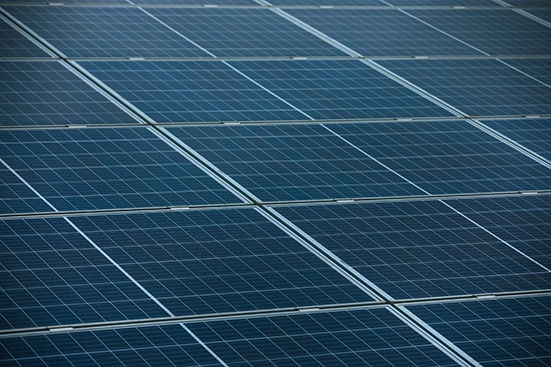
The ITL is part of the national strategy to develop clean energy to achieve carbon neutrality by 2050.
The FCFM centers involved are the Energy Center, the Advanced Mining Technology Center (AMTC) and the Center for Mathematical Modeling (CMM), but an open call will be made to structure projects that generate products mainly with TRL 5-9 maturity, adds the academic. Meanwhile, the FCFM has already advanced in the presentation of projects that will later be evaluated by the ITL to receive funding. “Among them, one that addresses several integrated processes: a tower concentrating solar energy captured by many mirrors. The energy is then used, for example, to desalinate water and produce ammonia and green hydrogen in the same place, the water is used to produce vegetables protected from the sun by the mirrors and fish production, while the ammonia and hydrogen are transported in liquid or gas form to serve as fuel in other distant places,” says the dean.
Featured image credits: Kumpan Electric on Unsplash
Secondary photo credits: Markus Spiske on Unsplash
Posted on May 2, 2023 in News
