


 Noticias en español
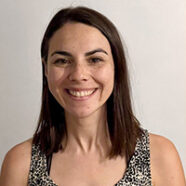
Biochemist Marianne Buscaglia recently joined the CMM team led by Alejandro Maass that seeks to gather key information for decision-making in this area.
‘Estructura y función de comunidades de virus gigantes en ecosistemas marinos del Pacífico Sur’ es el nombre del proyecto recientemente adjudicado por Marianne Buscaglia Fernández –bioquímica y magíster en Bioquímica de la Universidad de Chile y doctorada en la Pontificia U. Católica de Chile– para acceder a un cargo postdoctoral en el Centro de Modelamiento Matemático (CMM).
‘Structure and function of giant virus communities in South Pacific marine ecosystems‘ is the name of the project recently awarded to Marianne Buscaglia Fernández -biochemist and Master in Biochemistry at the University of Chile and PhD at the Pontificia U. Católica de Chile- to access a postdoctoral position at the Center for Mathematical Modeling (CMM).
“In this research we seek to characterize giant virus communities in terms of their diversity and metabolic potential in different marine ecosystems of the South Pacific, considering the physicochemical characteristics of the environments where they are distributed. In the oceans, giant viruses infect eukaryotes, including those that carry out primary production, so they play a key role in maintaining the balance of these ecosystems”.
In her new role, Marianne will collaborate with researcher Alejandro Maass, coordinator of the Climate and Biodiversity line at CMM, in the context of Fondation Tara Océan’s Plankt’Eco project funded by the French Global Environment Facility (FFEM).
Its objective, Maass explains, is “to create tools that help in making decisions about ocean monitoring based on plankton biology. In Chile, our role in this international project is to develop the KOPAs (Key Ocean Planktonic Areas) tool together with researchers from the University of Nantes”.
“This tool, based on remote sensing and plankton genomics (for now viruses and bacteria)”, the researcher explains, “aims to predict the state of plankton in relation to ocean ecosystem functions and thus help develop monitoring tasks and eventually be useful for deciding areas to watch carefully for eventual protection”.
Regarding the role of postdoctoral researcher that Marianne is performing in this context, Alejandro Maass explains that her functions are related to “finding key viral elements that characterize the different zones of the Chilean coastal ocean explored in our expedition Mission Microbiome – CEODOS in 2021. Then, use this as a baseline for subsequent monitoring”.
By Iván Tobar Bocaz, journalist at the Centro de Modelamiento Matemático (CMM), Concepción, Chile
Posted on Mar 24, 2025 in News
