
From crime prosecution to efficiency in health and medical licensing, AI is already beginning to be integrated into the heart of public administration in Chile. But its use requires clear rules, ethical safeguards and a robust institutional framework.
One of the great opportunities offered by science, technologies and new artificial intelligences is their use in public administration. In how modern tools can optimize the State, impact on public services and institutions, and how areas such as health, education and security can improve their efficiency and transparency.
One of the recent cases of national impact is the misuse of medical leave. The Comptroller’s report that portrayed more than 25,000 public officials traveling outside the country in the middle of their supposed medical rest sparked calls to improve control and modernize the State. For this, technology plays a fundamental role.
“The issue of crossing databases for the purposes of identifying infractions in terms of misuse of medical licenses is possible thanks to the use of technological capabilities. Not necessarily artificial intelligence but Big Data, that is, the treatment of large amounts of data from process optimization“, said Lorena Donoso, an academic at the Faculty of Law of the Casa de Bello and a specialist in law and technology, in an interview with Radio y Diario Universidad de Chile.
The lawyer maintains that the use of technologies allows for a “better control and a better use of public resources”. Donoso suggests that it is necessary to “follow the example of projects that have taken advantage of these technologies”, but at the same time “with due ethical control”.
But this use, derived from a contingent problem, is not the only one that can be given to artificial intelligences to improve public management. Donoso gives as an example the “Heredia Prosecutor”, an artificial intelligence used by the Public Prosecutor’s Office that reduces the time it takes to investigate crimes.
“Also in the field of health, the University of Chile, the Faculty of Medicine in conjunction with the Faculty of Engineering, some of its academics have been working with artificial intelligence to make organ procurement processes more efficient in the context of transplants. We have examples in the field of criminal prosecution, in health, which show that these technologies are very useful if they are used properly“, Donoso explained.
Alejandro Jofré, an associated researcher at the Center for Mathematical Modeling (CMM) and an academic at the Department of Mathematical Engineering of the University of Chile, delves into the optimization of the State through technologies. “The State has an enormous amount of data. What is required is to structure and curate them, when they are not. Once done, the information that can be extracted from them and their use to automate processes and make the State more efficient through AI, is gigantic. It can radically change its functioning“, he mentioned with conviction to our media.
SITIA project
With security as one of the priorities of the authorities, the Integrated Teleprotection System with Artificial Intelligence or better known as SITIA project was created. One of the innovative initiatives at national level that seeks to put science and technology at the service of the State.
Promoted by the Fundación Encuentros del Futuro, academics from different universities and experts in artificial intelligence, the SITIA project focuses on the prosecution of crime. A work presented to the then Minister of the Interior and Security, Carolina Tohá, and the President of the Republic, Gabriel Boric, who gave way to its development in the last two years.
The executive vice-president of Fundación Encuentros del Futuro, Guido Girardi, emphasized that “artificial intelligence can be a key ally in the fight against organized crime. We have been working for more than a year with universities, police and the State to create a system that not only detects stolen cars or faces with outstanding warrants, but can also identify criminal behavior in real time, such as people who pull out a gun or a knife, or who move suspiciously near residences or premises”.
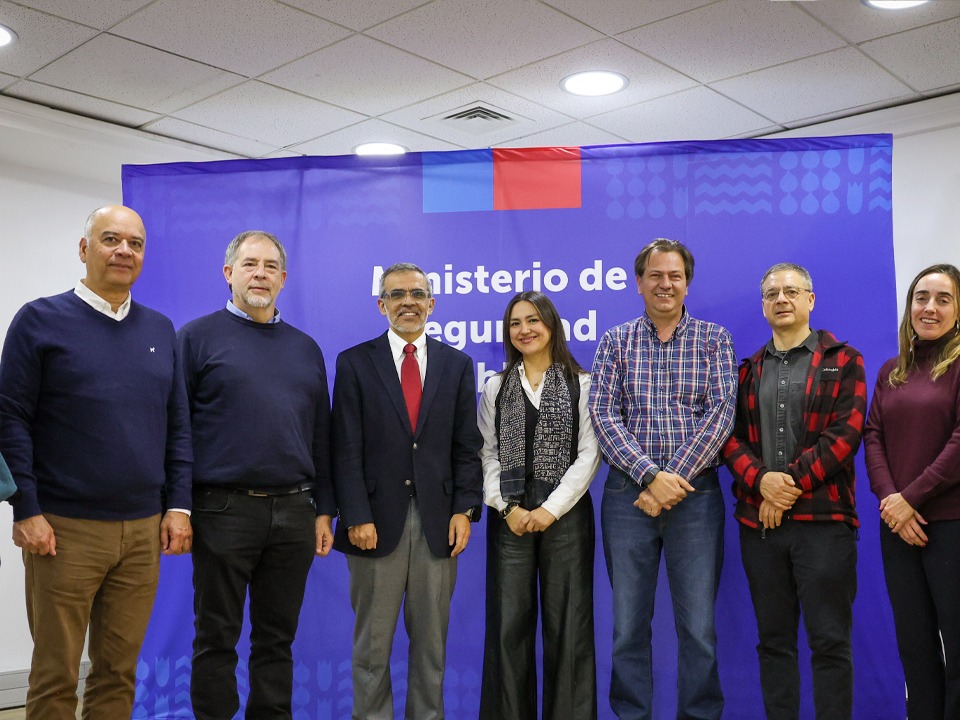
“This effort, completely altruistic and collaborative, demonstrates that science and technology can be at the service of citizen security”, he acknowledged after meeting with the Ministry of Public Security, Luis Cordero, to present the project’s progress.
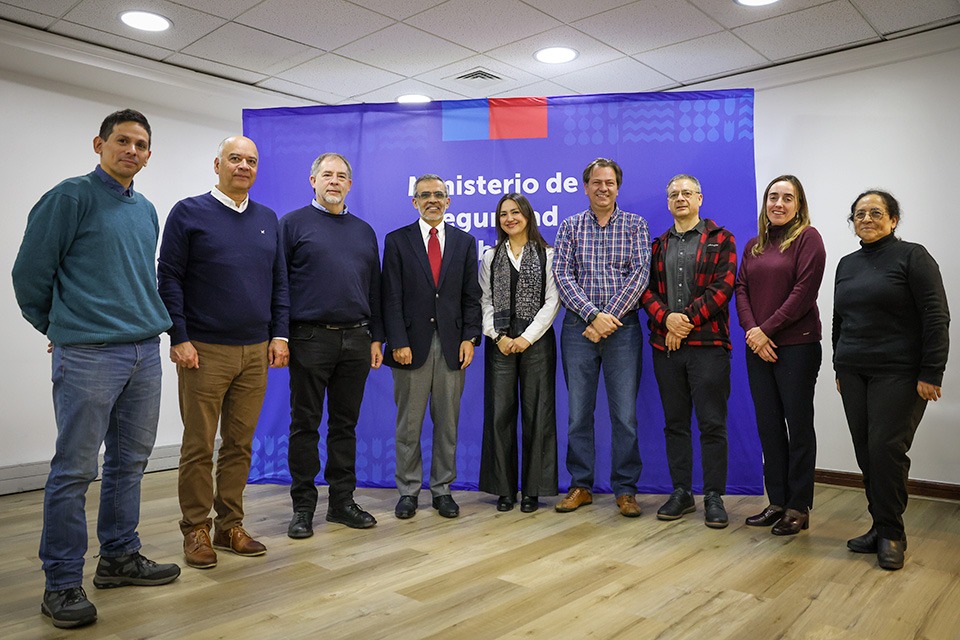
In practice, as Alejandro Jofré, academic coordinator of the SITIA project, explained to our media, “it is an ecosystem of technological innovation that articulates surveillance solutions, artificial intelligence and data analysis to strengthen public safety”.
“Its focus is on the detection and prevention of crime through the integration of cameras, sensors and data sources from public and private institutions, prioritizing three critical areas: vehicles with a warrant, missing persons and fugitives,” the academic continued.
Lorena Donoso, who is also part of the SITIA project team, emphasizes that the initiative through AI could “enable the activation of an integrated citizen teleprotection system that would take advantage of the surveillance camera systems installed on public roads”.
This project began to be implemented in more than 14 municipalities in the Metropolitan Region in 2024, according to Alejandro Jofré. “In 2025 a regional expansion is projected, including the integration of 4,000 additional cameras and new AI use cases,” he assured.
The challenges of its implementation
What happens to the data collected, what about possible biases, when and how the technologies should be used and the ethics behind their use are also part of the debate. Establishing clear governance around the new technologies is critical, experts say.
“There is a tremendous opportunity as a country to be able to generate contributions to the welfare of society from artificial intelligence. The important thing is to safeguard standards, so that we do not end up being slaves of technologies, but that technologies contribute to people’s welfare”, said Lorena Donoso.
Alejandro Jofré, points to the relevance of the personal data law. “It is crucial to make an even greater leap in the applicability of responsible AI. In that sense, we have to advance more effectively in the regulatory frameworks for the responsible use of AI. Today we have local experts who can contribute a lot to this development”, he said.
By Camilo Vega Martínez, Diario Uchile
