The project, funded by the international cooperation agencies AGCID and AMEXCID, aims to refine mathematical models of epidemic processes by incorporating social and behavioral determinants. This represents an innovative line of research in Latin America, with the goal of generating mathematical tools that can contribute to public health policymaking in both countries.
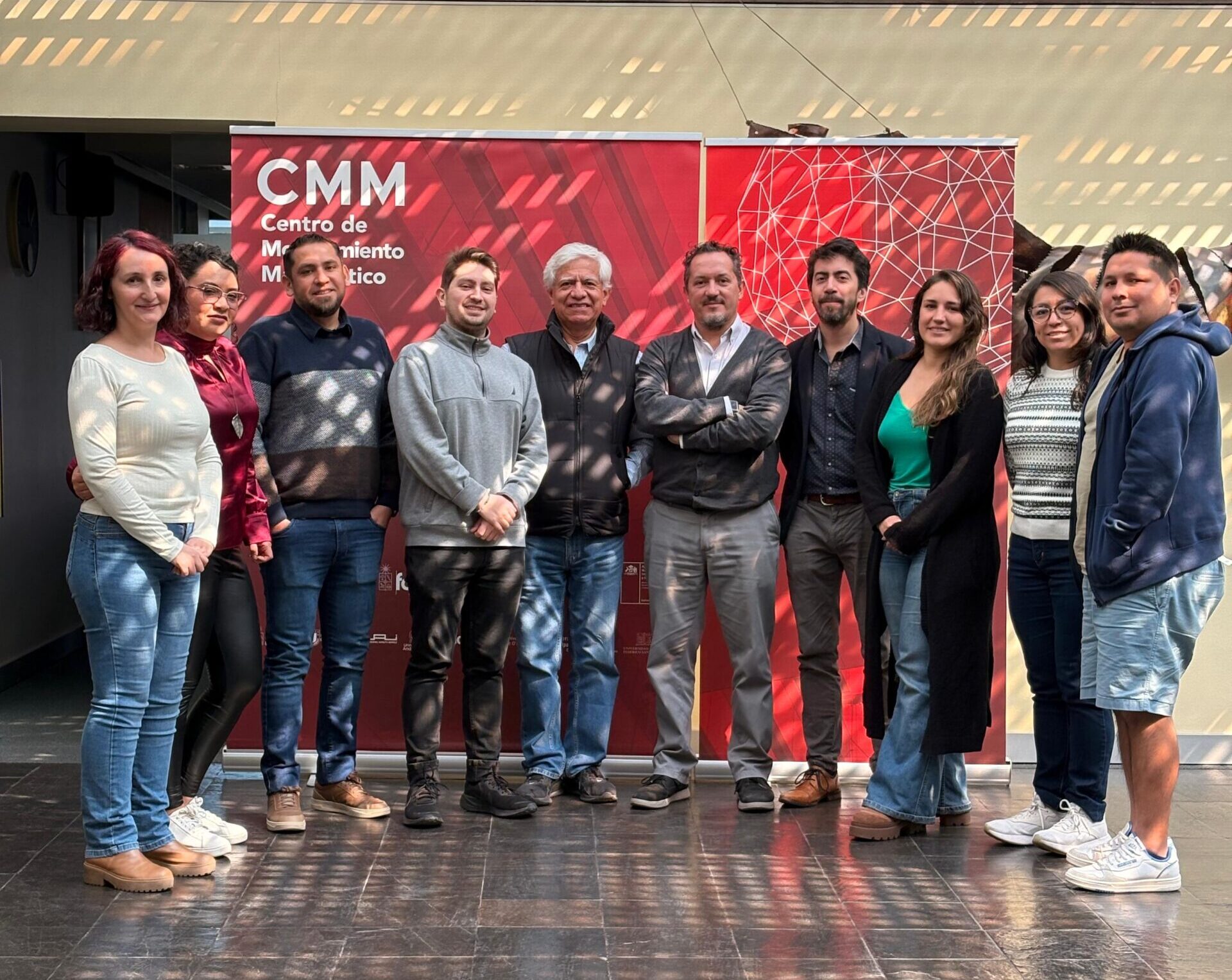
From September 1 to 5, 2025, researchers from the National Autonomous University of Mexico (UNAM) and the University of Sonora (UNISON) worked alongside the team from the Center for Mathematical Modeling (CMM) of the University of Chile to refine epidemic process modeling, incorporating population structure, regional dynamics, and risk groups.
This binational collaboration, which arose from the health consequences of the COVID-19 crisis, seeks to improve the prediction of epidemiological scenarios and enhance responses to future outbreaks. Héctor Ramírez, Director of the CMM, stated: “Our objective is to create mathematical models that support decision-making in the event of future epidemic outbreaks, also incorporating social and behavioral determinants. This will make it possible to design more efficient public health strategies for potential events.”
This pioneering research in Latin America, which remains relatively unexplored globally, contributes mathematical models as decision-support tools for public health policy. Tishbe Herrera, UNAM researcher, emphasized: “Integrating social and behavioral determinants into these mathematical models is not common practice, which is why this approach represents a significant advancement in world-class epidemiological research.”
Meanwhile, Gloria Henríquez, CMM Digital Health researcher, explained: “This joint effort aims to strengthen collaboration between academia and policymakers. These efforts represent practical steps toward improving preparedness and response to health emergencies.”
University of Sonora researcher Adrián Acuña highlighted the importance of international collaboration: “Working between Mexico and Chile has been very enriching. These mathematical models will generate indicators that help us better understand outbreaks and design more effective responses in different social contexts across both countries.”
Funded by the Chile–Mexico Cooperation Fund, this initiative is a collaborative effort involving multiple institutions. In Chile, participants include the CMM at the University of Chile, CEPS at Universidad del Desarrollo, the AM2V research group at Universidad Técnica Federico Santa María, and the University of Aysén. From Mexico, collaborators include the Institute of Mathematics and the National School of Higher Studies Juriquilla Unit (both part of UNAM), as well as the University of Sonora.