
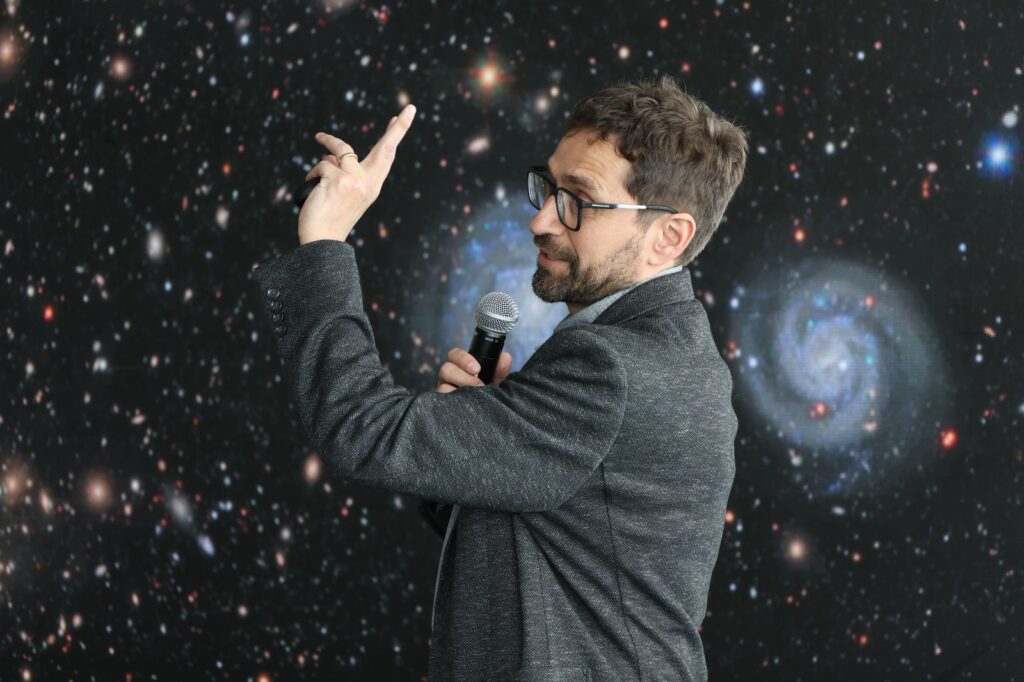
- Guillermo Cabrera-Vives leads the project that brings together the capabilities of the Millennium Institute for Astrophysics MAS, the Center for Mathematical Modeling at the University of Chile, the University of Concepción, and Data Observatory.
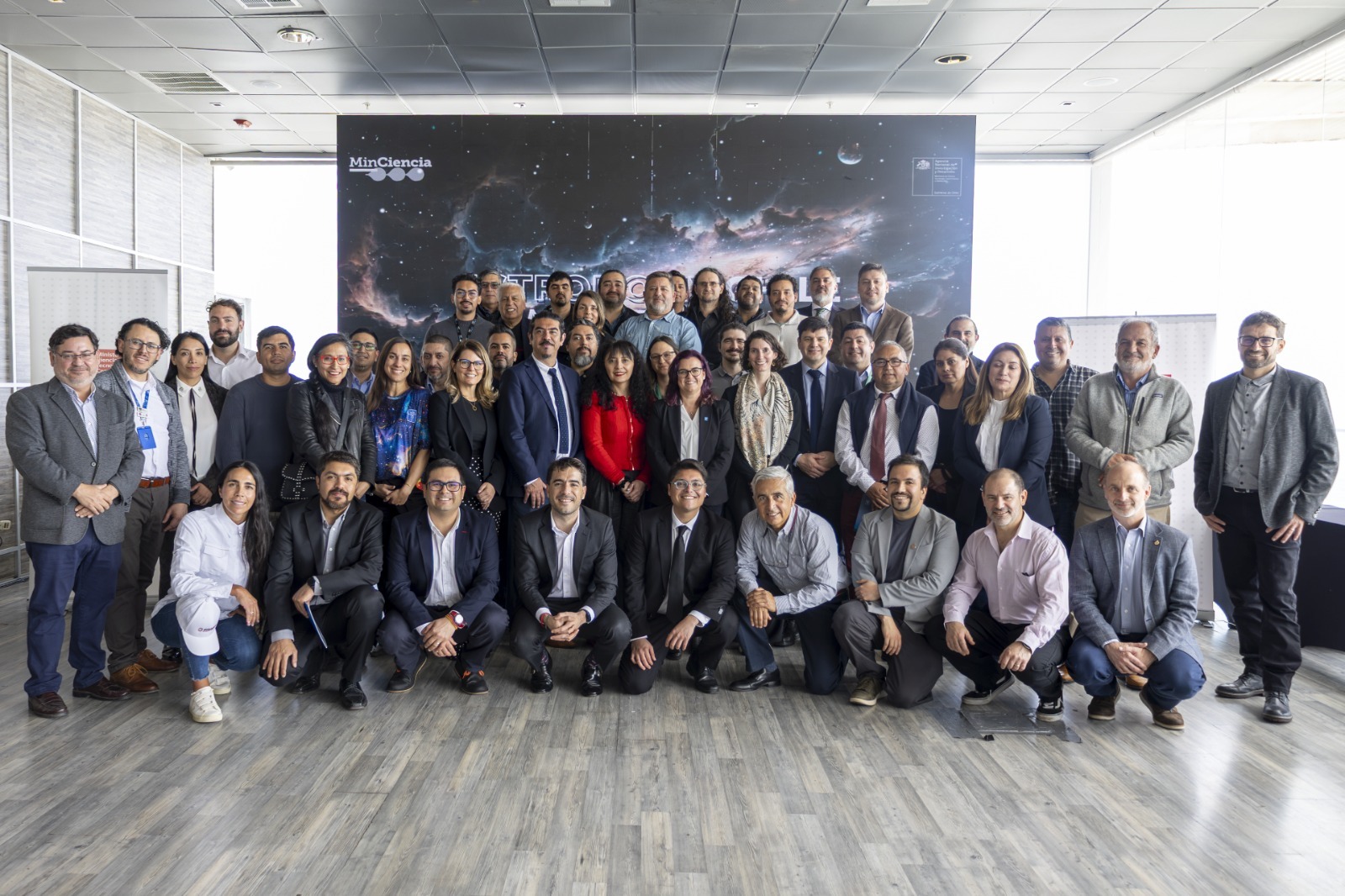
Transforming the knowledge generated by Chilean astronomy into technological solutions with industrial impact was the central objective of the conversation generated at the Astronomy Chile Industry Day event, promoted by the Emerging Technologies Division of the Ministry of Science, Technology, Knowledge, and Innovation and the National Agency for Research and Development (ANID), which brought together researchers and representatives of companies and public agencies in Antofagasta.
Among those in attendance was Prof. Guillermo Cabrera-Vives, an academic from the Department of Computer Engineering and Computer Science at the University of Concepción’s Faculty of Engineering and director of ALeRCE (Automatic Learning for the Rapid Classification of Events), a project developed by the Center for Mathematical Modeling (CMM) at the University of Chile and the Millennium Institute for Astrophysics (MAS), in conjunction with the Data Observatory (DO) and the University of Concepción (UdeC), which, using cloud infrastructure and machine learning models, is capable of bringing real-time processed products and services to the astronomical community.
In his presentation, ‘Technology Transfer from Astronomy: AI and Data Science with Impact‘, the academic discussed the work of ALeRCE, which uses artificial intelligence and machine learning techniques to classify millions of astronomical events every night based on real-time processing of data generated by telescopes such as the Vera C. Rubin Observatory.
During his presentation, the academic highlighted how the knowledge and tools developed in astronomy can be transferred to other sectors. “Astronomy is one of the few areas where we can lead from Chile in data and artificial intelligence, because we have access to the best telescopes in the world. So it has been natural for us to take the lead, particularly in ALeRCE, and that puts us in a very good position to then apply those same techniques in industry”, explained Cabrera-Vives, who is also director of the Center for Data and Artificial Intelligence (CDIA) at the UdeC.
Currently, ALeRCE brings together users from more than 130 countries, with more than 24,000 reported supernova candidates and nearly 3,000 confirmed, consolidating itself as one of the world’s leading references in automated classification of astronomical events.
The experience with ALeRCE and the work at the CDIA have led to the creation of a wide range of projects aimed at technology transfer based on data and artificial intelligence with a real impact on society.
—
About ALeRCE
The ALeRCE project, Automatic Learning for the Rapid Classification and Events, is an initiative led by the Millennium Institute of Astrophysics (MAS), the Center for Mathematical Modeling (CMM) at the University of Chile, the Data Observatory (DO), and the University of Concepción.
It is an agent or broker that, through the development of artificial intelligence and machine learning tools, acts as an intermediary between large astronomical surveys and follow-up telescopes. In particular, ALeRCE was the only broker chosen in South America to process the large amount of data from the Vera Rubin Observatory, soon to be operational, and its LSST (Legacy Survey of Space and Time) monitoring, thus placing Chile at the forefront of new astronomy, characterized by the need to analyze large amounts of data in short periods of time.
To date, ALeRCE processes more than 300,000 alerts per night, which has led to the discovery of more than 23,000 supernova explosions, equivalent to 12 per night, in addition to other transient objects.
—
—
By Iván R. Tobar Bocaz, CMM Communications.
Source: Faculty of Engineering, University of Concepción.
Photo credit: Agency for National Research and Development, ANID.
