

In recent years, we have witnessed an unprecedented wave of technological adoption driven by the growing need to process massive volumes of data in real time. In this new landscape, high-performance computing (HPC) has solidified its place as an essential pillar, with supercomputers representing not only technical breakthroughs but also a testament to the leadership and innovation capacity of the countries that develop them.
Cutting-edge processors and computing accelerators are transforming data centers, enabling new possibilities in artificial intelligence, scientific simulations, and large-scale data analytics—capabilities that respond to the rising demands for efficiency, performance, and sustainability in the global technological ecosystem.
Leftraru 2: The core of Chile’s public advanced computing
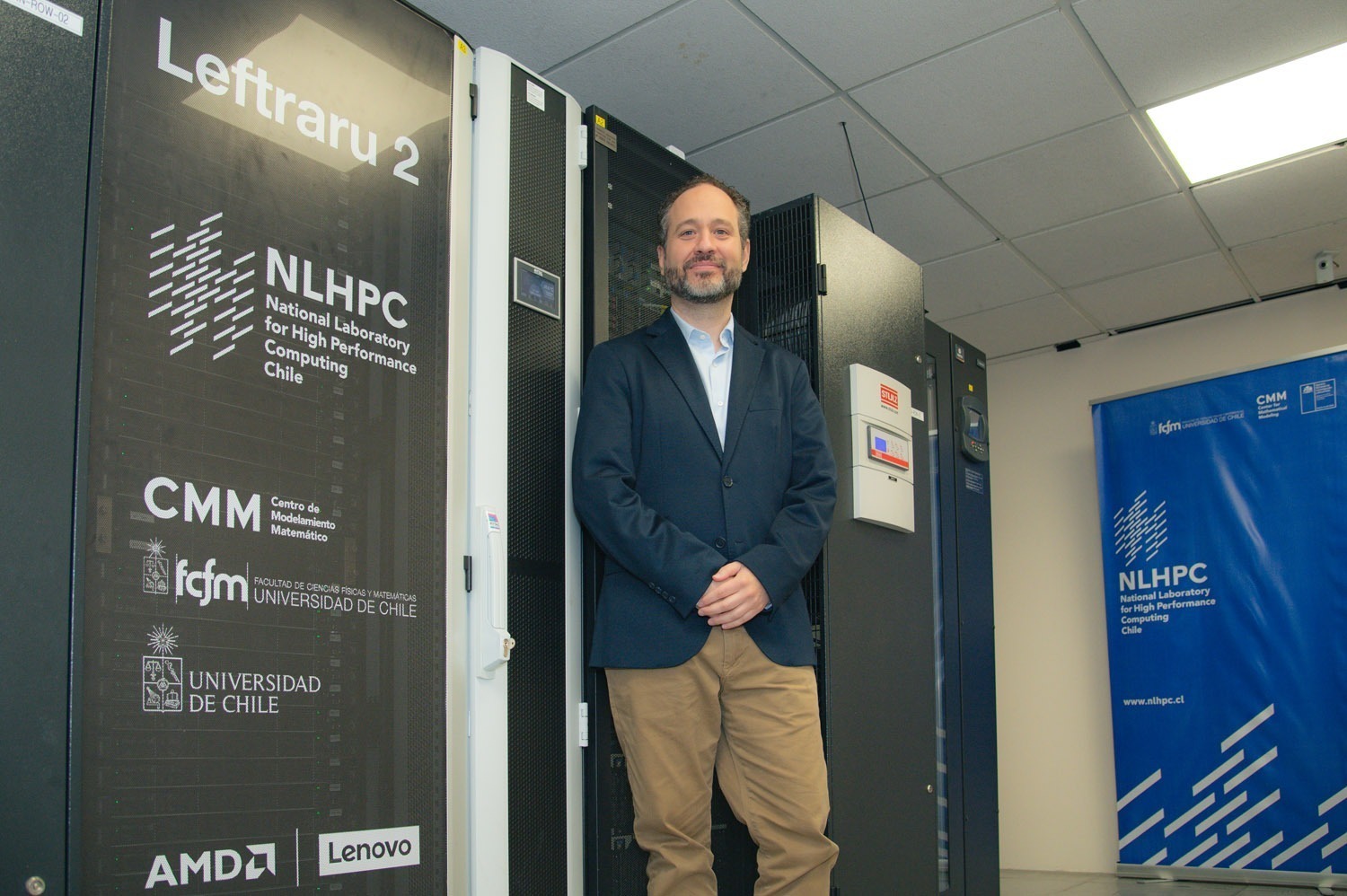
Such is the case of the Leftraru 2 supercomputer, housed at the National Laboratory for High-Performance Computing (NLHPC) of the Center for Mathematical Modeling (CMM) at the Faculty of Physical and Mathematical Sciences (FCFM), University of Chile. Since 2024, it has become a cornerstone for research and innovation nationwide. Its significance lies not only in its strategic presence but also in the qualitative leap it represents in terms of computational power, efficiency, and research potential for Chile’s scientific ecosystem.
To reach this level, Leftraru 2 integrates an infrastructure engineered to deliver top-tier performance in advanced computing. Its architecture was conceived to address the most demanding challenges in scientific research, industrial development, and applied innovation, ensuring energy efficiency, scalability, and exceptional processing capacity.
An architecture designed to tackle grand challenges
At its core, Leftraru 2 combines power and versatility through a technological foundation built to solve complex tasks with maximum efficiency. The system, supplied and deployed by Emtec consists of 27 Lenovo ThinkSystem SR645 V3 servers, each equipped with 128-core AMD EPYC™ 9754 processors and 768 GB of memory. This configuration enables thousands of calculations to run in parallel and supports the simultaneous processing of massive datasets, climate models, engineering simulations, and genomic analyses. Altogether, these servers provide 6,912 cores dedicated exclusively to intensive computing and rapid data access.
Complementing this infrastructure are two Lenovo ThinkSystem SR675 V3 servers, each powered by AMD EPYC 9224 processors and six AMD Instinct™ MI210 GPUs. These accelerators are designed for even more demanding workloads such as training AI algorithms, processing satellite imagery, and simulating complex scenarios in fields such as health or energy. This combination allows processes that previously required weeks to be completed within hours, opening new pathways for applied research and technological development.
Thanks to this infrastructure, the NLHPC has quadrupled its computing capacity while only doubling its energy consumption, positioning Chile among Latin America’s leading hubs for scientific research. As a public and open resource, Leftraru 2 expands access to advanced computing for universities, industry, and research centers, fostering talent development and promoting collaborative innovation.
Among the many concrete examples of its impact is the work led by Prof. Susana Mondschein, Director of the Department of Industrial Engineering at the University of Chile, whose MIRAI Chile project uses Leftraru 2 to predict breast cancer within the public healthcare system. With the NLHPC’s capabilities, analyses that once required months can now be completed in a matter of days. Another example is DASH AI, led by Felipe Bravo, Director of the Data and Artificial Intelligence Initiative (IDIA), which seeks to provide companies, organizations, and individuals with an easy-to-use AI system capable of managing large databases through Leftraru 2.
“For us, it is essential to distinguish ourselves from cloud-based tools offered by some big tech companies, where it is often unclear which model is running, with which parameters, or where the computation is actually taking place an important limitation for public institutions. We want to offer full control over what is being executed, where it is being executed, and the ability to explain the models being developed. This is especially critical for regulatory matters, and Leftraru 2 makes this possible,” adds Bravo, who is also a principal investigator at CENIA and the Millennium Institute for Foundational Research on Data.
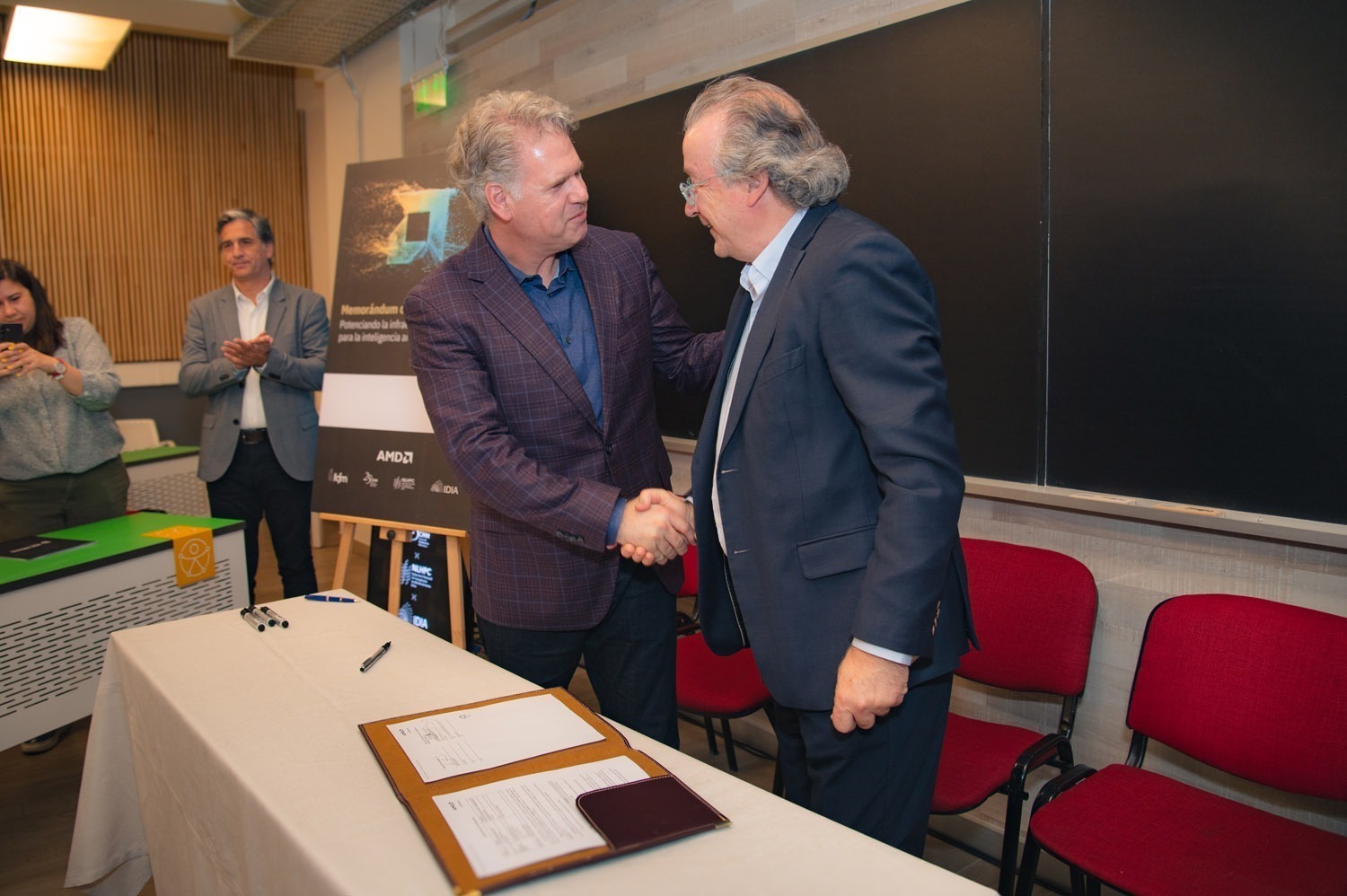
AMD and FCFM sign MoU to strengthen scientific and technological collaboration
During AMD’s visit, the company signed a Memorandum of Understanding with the Faculty of Physical and Mathematical Sciences at the University of Chile to advance technical and strategic collaborations aimed at strengthening the country’s sovereign AI capabilities, optimizing technologies built on AMD platforms, and opening new opportunities for training, research, and preferential access to advanced development tools.
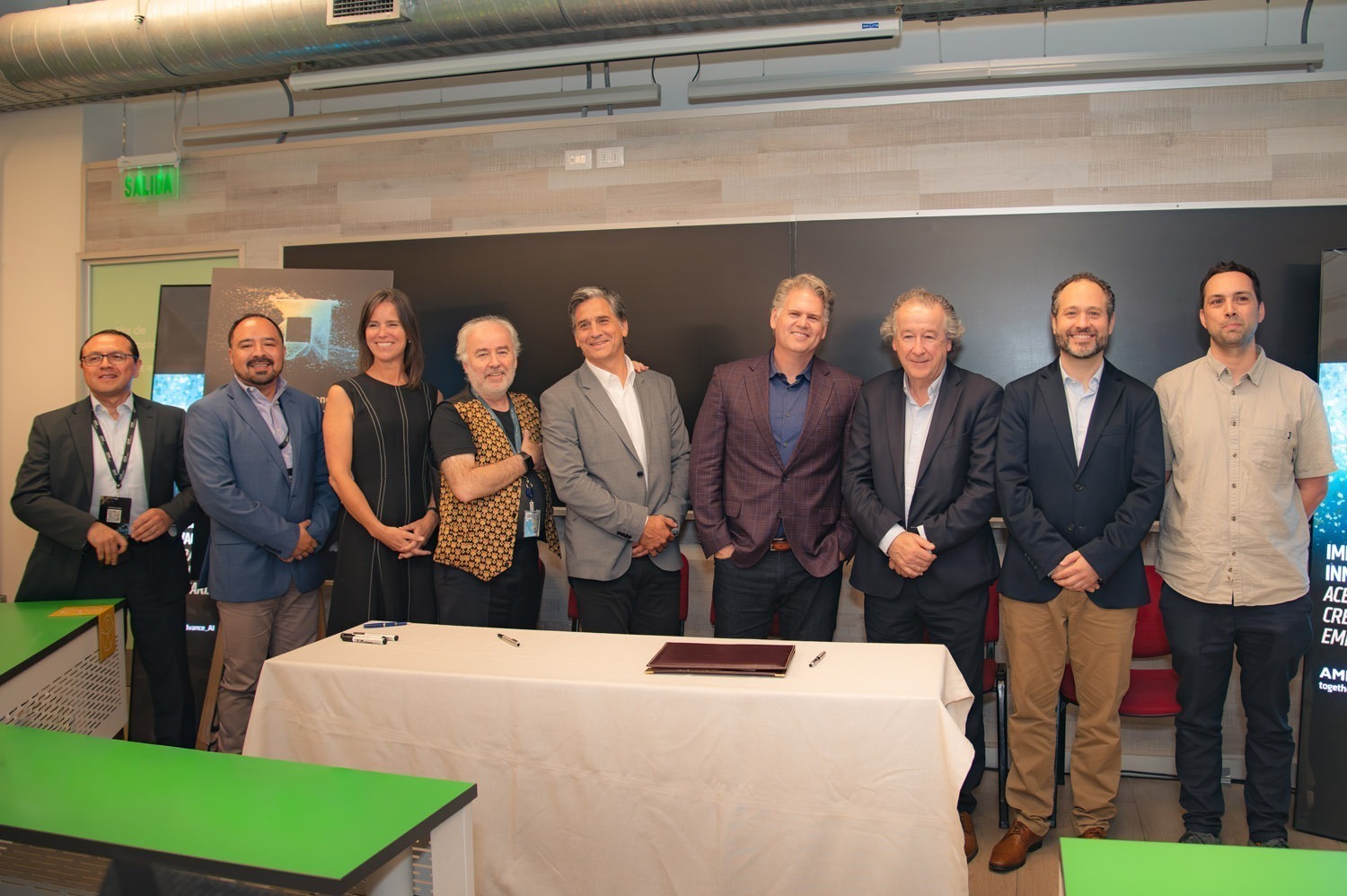
“We are convinced that strategic collaboration with the technology industry is essential to drive innovation and keep Chile at the forefront of advanced computing capabilities. This MoU with AMD allows us to strengthen frontier research, train highly specialized talent, and accelerate the development of solutions that directly address the country’s scientific, productive, and social challenges,” stated Dean Francisco Martínez.
Juan Moscoso, Commercial Segment Manager for the SOLA region at AMD, emphasized: “Our mission is to ensure that the computational power behind the world’s most advanced supercomputers is also available in our region. With AMD EPYC server processors and AMD Instinct accelerators, we are placing in the hands of researchers, businesses, and governments the technology required to solve the most complex challenges of our time.”
Ginés Guerrero, Executive Director of the NLHPC, added: “The incorporation of AMD solutions has been decisive in expanding the country’s scientific capabilities. Today, hundreds of researchers can run models, process data, and accelerate discoveries with levels of efficiency and performance that simply did not exist in Chile before”.
Written by Cintia Beltrán, CMM Communications
