
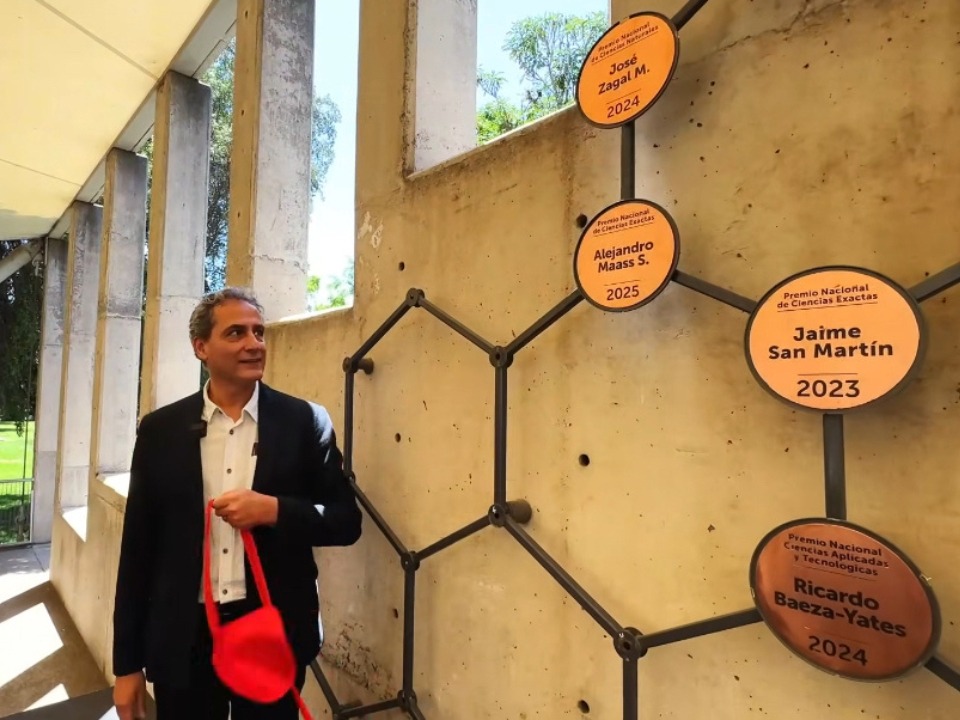
- The researcher from the CMM at the University of Chile emphasized the importance of fostering scientific interest in children and pointed to the importance of collaboration.
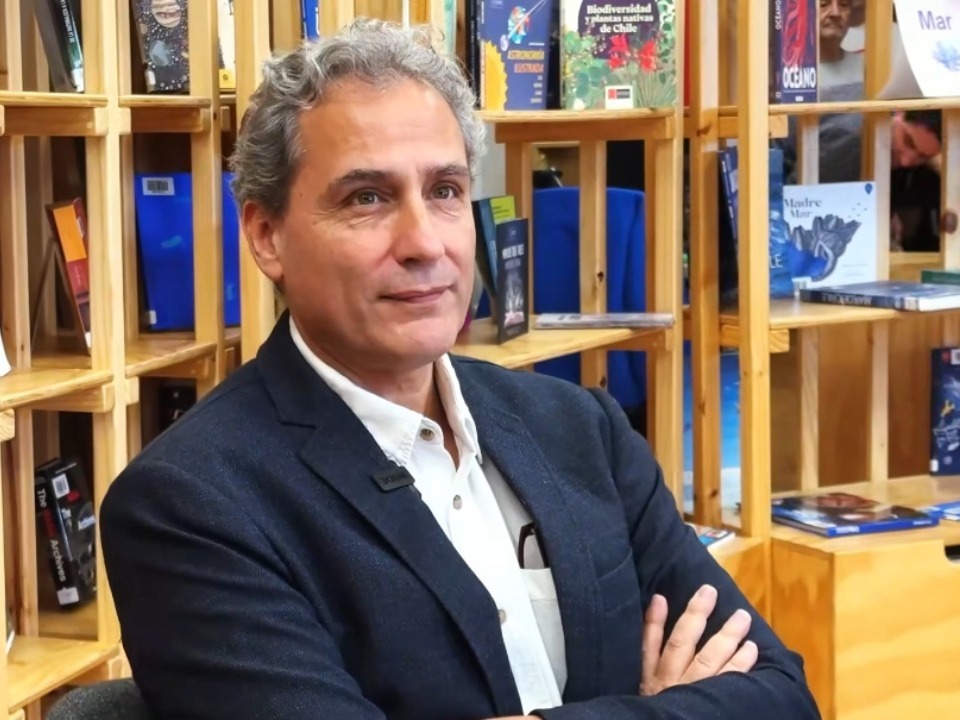
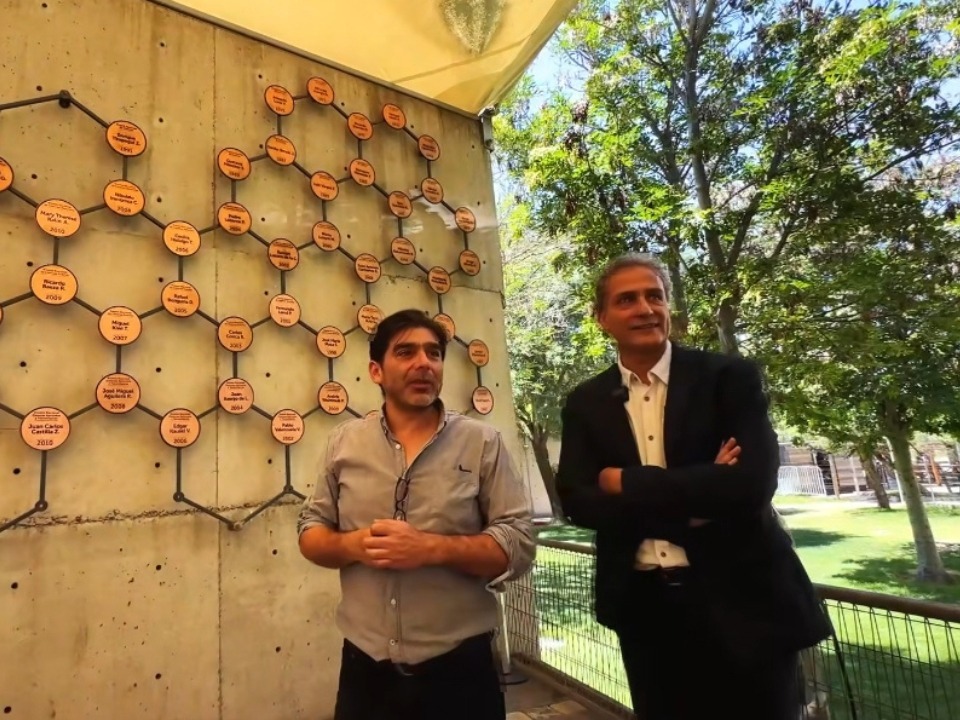
On Sunday, November 23, a commemorative plaque was unveiled on the MIM Science Walkway bearing the name of Professor Alejandro Maass, winner of the 2025 National Prize for Exact Sciences, principal investigator at the Center for Mathematical Modeling (CMM) and the Millennium Institute for Genome Regulation, and professor at the Faculty of Physical and Mathematical Sciences at the University of Chile.
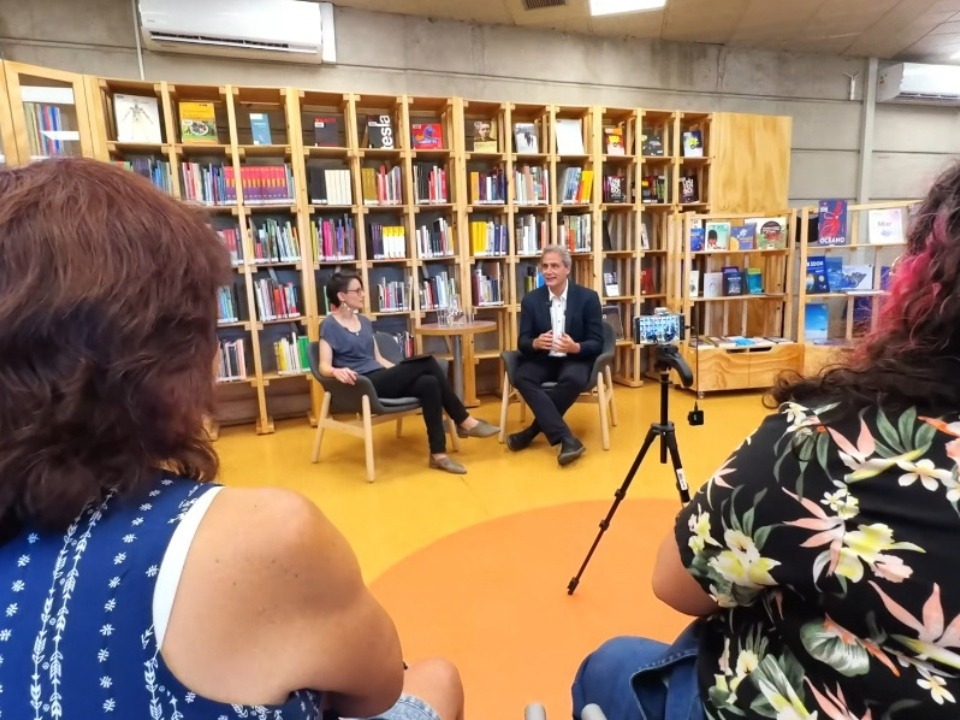
The tribute took place in the context of the Biennial of Scientific Culture organized by the Mirador Interactive Museum (MIM) and the Ministry of Science, Technology, Knowledge, and Innovation, and was attended by representatives of the scientific community and children and young people, as is traditional in this annual ceremony.


The award seeks to recognize Prof. Maass for his contributions to mathematics and systems biology, which have made him an international leader in ergodic theory, dynamic systems, and mathematical modeling applied to complex problems.
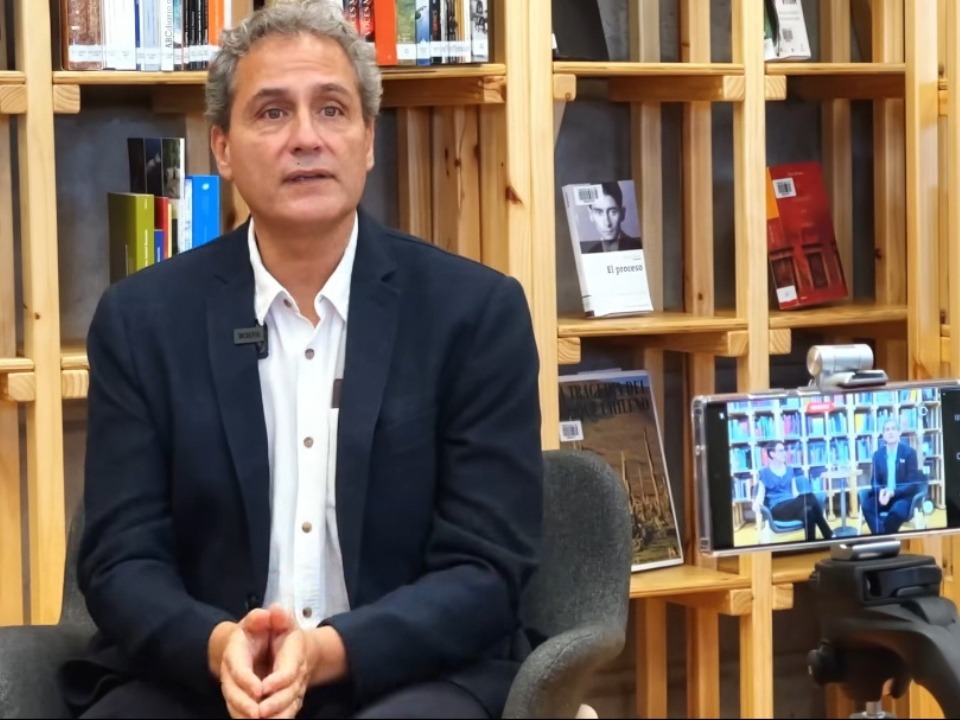
“It has been very nice to connect with the children”, the honoree said. “I believe that science starts when you are a child, and we must encourage them to do science because it is also a driver of individual growth”.
The academic stated that “everything that is happening in the world today needs more science. We need to change our development model and urgently include science in that model”, emphasizing the need to change that perspective starting in childhood.

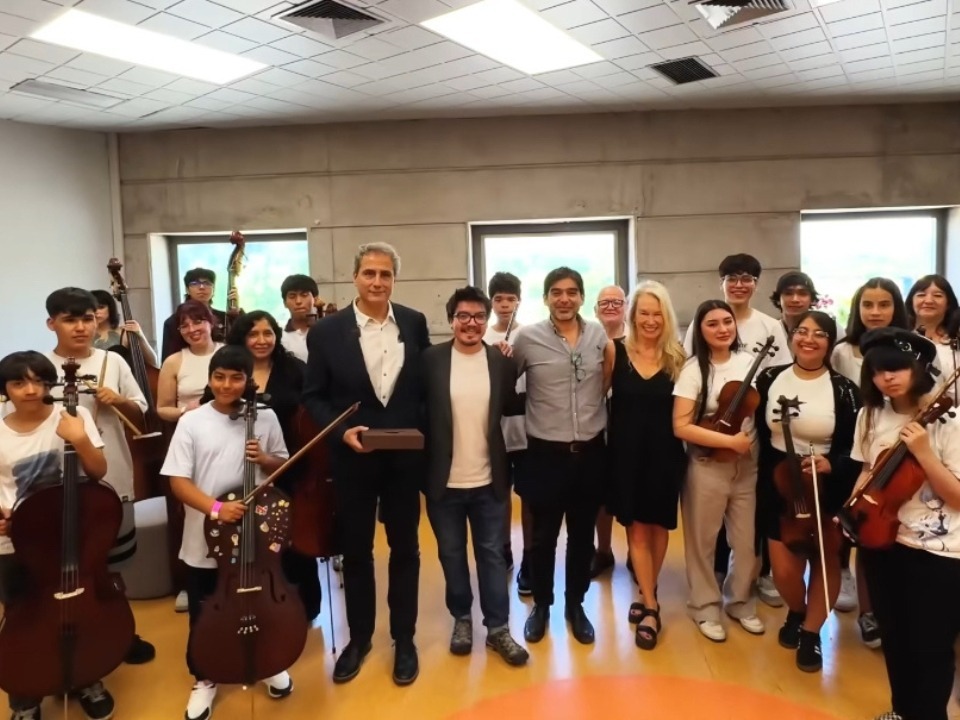
The scientist highlighted the importance of collaboration at different levels throughout his research career. “Part of my work over the last twenty years has involved teamwork, different disciplines, different professionals, and it is important to tell children to train themselves in this, because when you work as a team, you learn to value above all else what you are trying to solve”.
“When we come together as a team”, he emphasized, “we come together not only from our abilities, but also from what we don’t know, and from that perspective we work better to solve the problem, and that is the future. The future is that we are able to solve difficult problems together, each from what we know, understanding that we are all ignorant of what others know”.
By Iván R. Tobar Bocaz, CMM Communications.
Images credit: MIM Museum on Instagram.
