

- The latest edition of Revista de Educación highlights this initiative by CMMEdu as part of its national plan for the comprehensive improvement of the education system.
The recovery of pre-pandemic indicators such as school attendance rates and SIMCE results, among others, is the objective of the Educational Reactivation Plan currently being implemented by the Ministry of Education.
In this context, the Executive has currently launched 45 programs nationwide that focus on four areas: coexistence and mental health, strengthening learning, attendance and reconnection, and a final cross-cutting area. Of these initiatives, four were highlighted in the 145th edition of the Education Magazine (corresponding to September and October 2025), including the Sumo Primero 2025 National Plan, launched last April, which has already benefited more than 1.3 million students and 30,000 teachers.
Based on the resource “Study with your Friends: Mathematics for Elementary School” created by Masami Isoda of Tsukuba University in Japan, it is a unique catalog of mathematics textbooks that was distributed to students in grades 1 through 6 in all schools and high schools throughout the country.
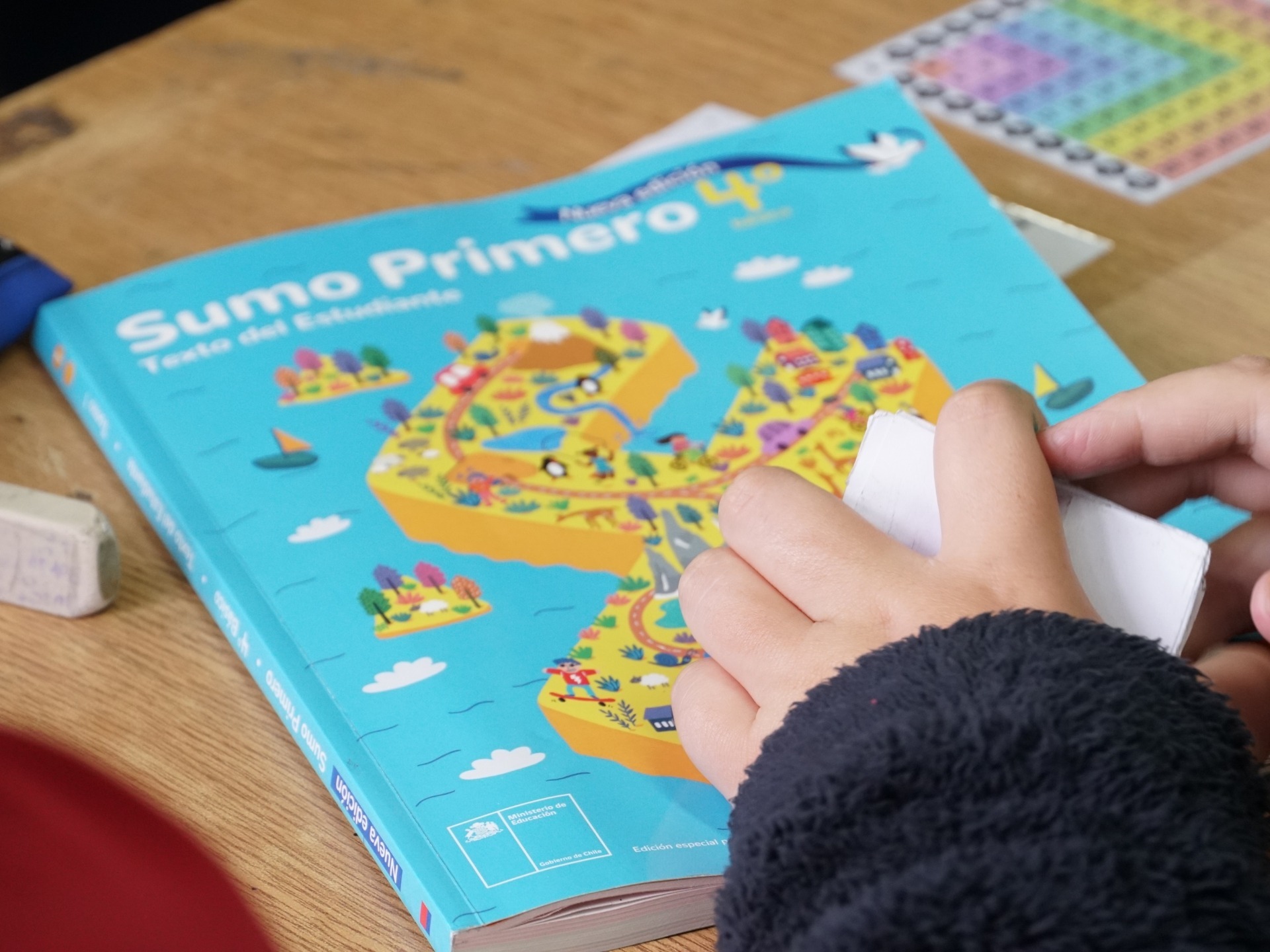
Sumo Primero was developed by specialists from the Center for Mathematical Modeling (CMM) at the University of Chile, through its Education Laboratory, CMMEdu, directed by Prof. Salomé Martínez. “Sumo Primero creates a unique opportunity for Chile, allowing schools to structure mathematics teaching from 1st to 6th grade, achieving the didactic coherence that is essential for learning mathematics,” said the expert.
Among other data that demonstrate its positive impact on school communities, the Revista de Educación reports that, within the framework of Sumo Primero, between April and October, 178 workshops were held nationwide, bringing together more than 2,100 teachers, webinars were held for parents and guardians, and an AI platform was made available to answer any questions about using the tool.
“This support has been essential in advancing better learning experiences, but also in achieving better results for children and young people,” said Ignacio Cáceres, executive director of the Santa Corina Local Public Education Service, according to the official publication of the Ministry of Education.
Details of this edition can be found on the official website of the Revista de Educación.
By Iván R. Tobar Bocaz, CMM Communications.
