


 Noticias en español
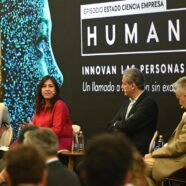
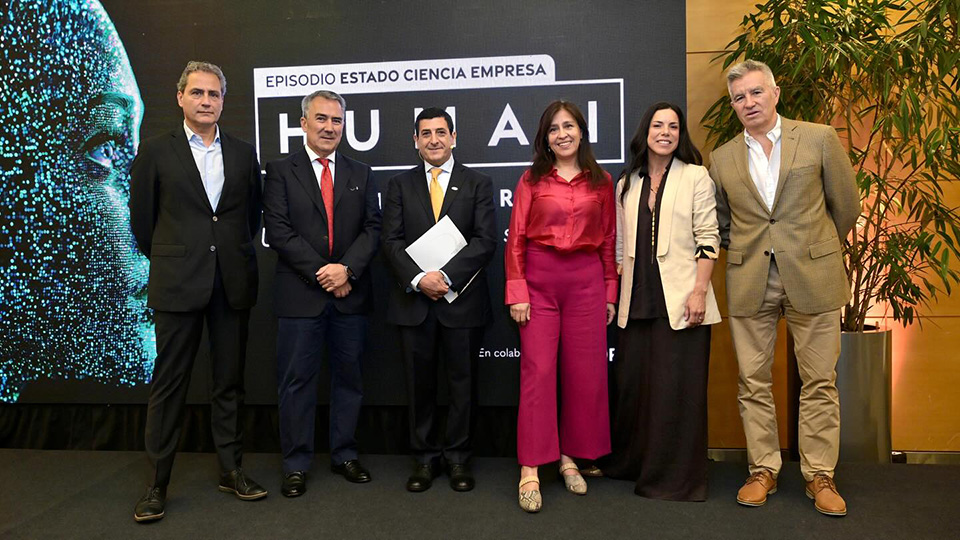
- The CMM’s principal investigator participated in the episode “State, Science, and Business”, which closed the Human cycle organized by ICARE’s Innovation Circle in collaboration with Corfo.
On Wednesday, October 29, under the title ‘State, Science, and Business’, the closing episode of the series ‘Human: People Innovate’ was held, organized by the Innovation Circle of the Chilean Institute of Rational Business Administration (ICARE) in collaboration with Corfo.
This event addressed the strategic relationship between the three actors, understanding that their collaboration is key to addressing the challenges of development, innovation, productivity, and sustainability that Chile faces.
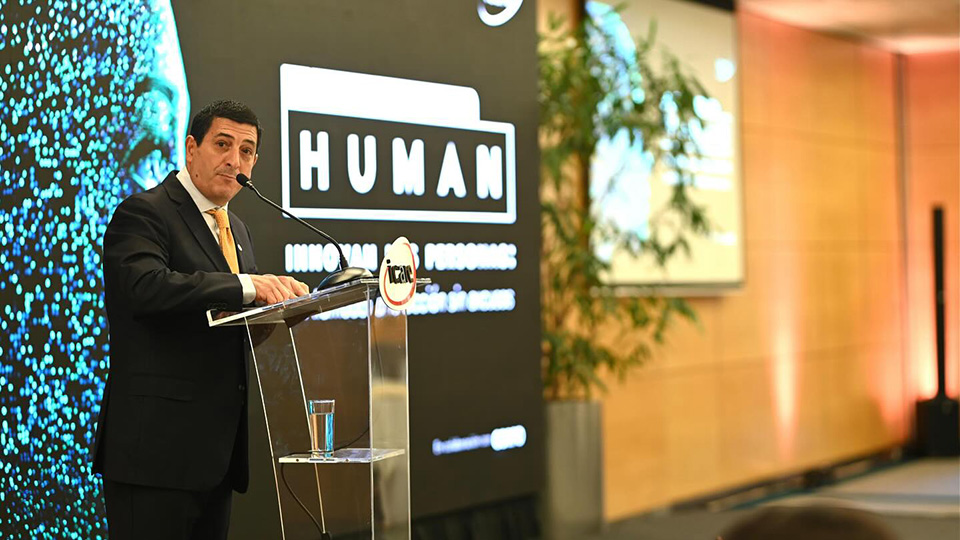
“No profound change occurs in isolation”, emphasized Daniel Daccarett, president of ICARE’s Innovation Circle, in his opening remarks. “Today, the call is to collaborate. Because when the state, science, and business work together, innovation ceases to be a promise and becomes real progress”.
One of the guests invited to share his vision was Prof. Alejandro Maass, winner of the 2025 National Prize for Exact Sciences, principal investigator and director of International Relations at the Center for Mathematical Modeling (CMM) at the University of Chile, and researcher at the Millennium Institute for Genome Regulation, who participated in a panel discussion alongside the executive director of the CTCI Council, Katherine Villarroel, and the president of DIGEVO, Roberto Musso.
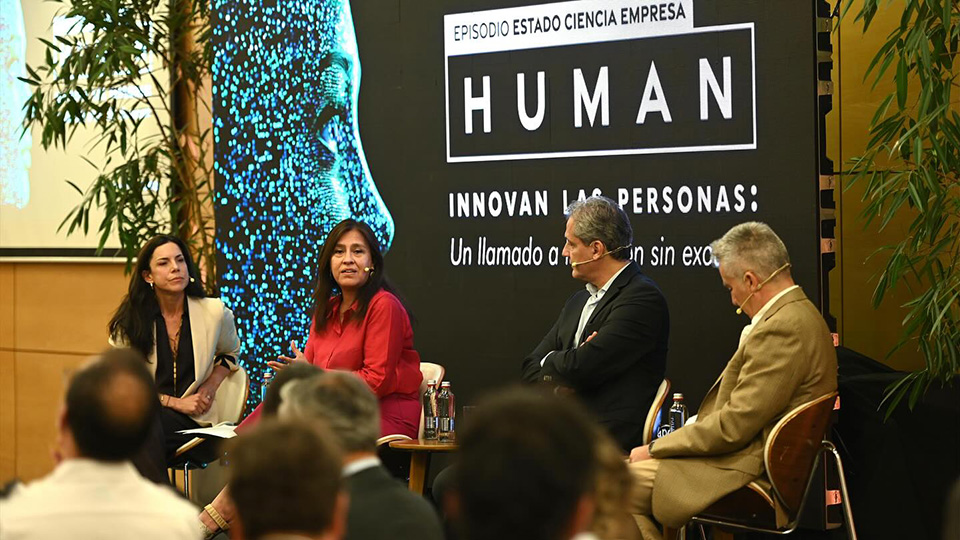
The academic from the Faculty of Physical and Mathematical Sciences at the University of Chile was responsible for opening the panelists’ presentations, stating that “I have always seen scientific research in Chile as being interested in the country’s development and in being part of this process. However, despite all the current efforts, we must work much harder to perfect the virtuous cycle that allows us to move from research to its applications and public policies”.
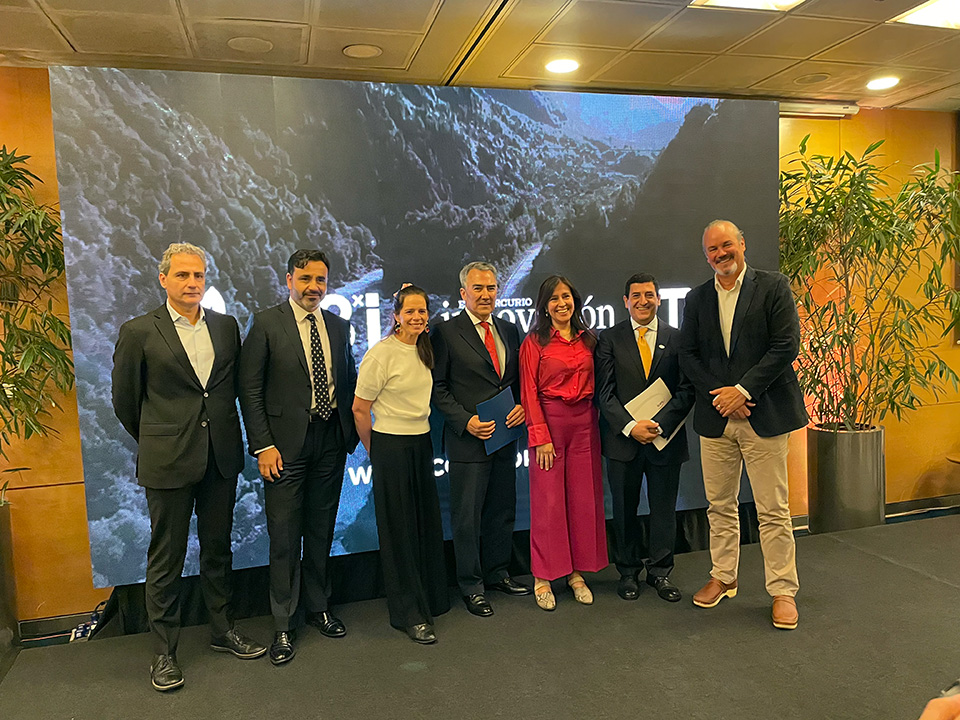
“In my experience, mathematics makes a lot of sense when it is put at the service of society and its problems”, explained the scientist. “A challenge for science, the state, and business is to work in harmony, always focusing on the problem we want to tackle together, breaking paradigms and hierarchies, to move toward its solution using our complementary skills and valuing each of them”.
Professor Maass cited mathematical models for understanding fractures in underground mines and predicting the movement of pests, as well as optimization systems and algorithms based on data science to improve public policies in telecommunications and marine biodiversity protection, as examples of innovation based on fundamental science with a concrete impact on society.
By Iván R. Tobar Bocaz, CMM Communications.
Photo credit: courtesy of ICARE; Cristián Murillo/CMM
Posted on Nov 17, 2025 in News
