

The Ministry of Education and the Education Laboratory of the Center for Mathematical Modeling (CMM) at the Faculty of Physical and Mathematical Sciences of the University of Chile convened a Strategic Review Session of the National “Sumo Primero” Plan. The meeting brought together key stakeholders from across the education system to analyze enabling factors and barriers within the Plan’s implementation model, drawing on the work carried out throughout 2025.
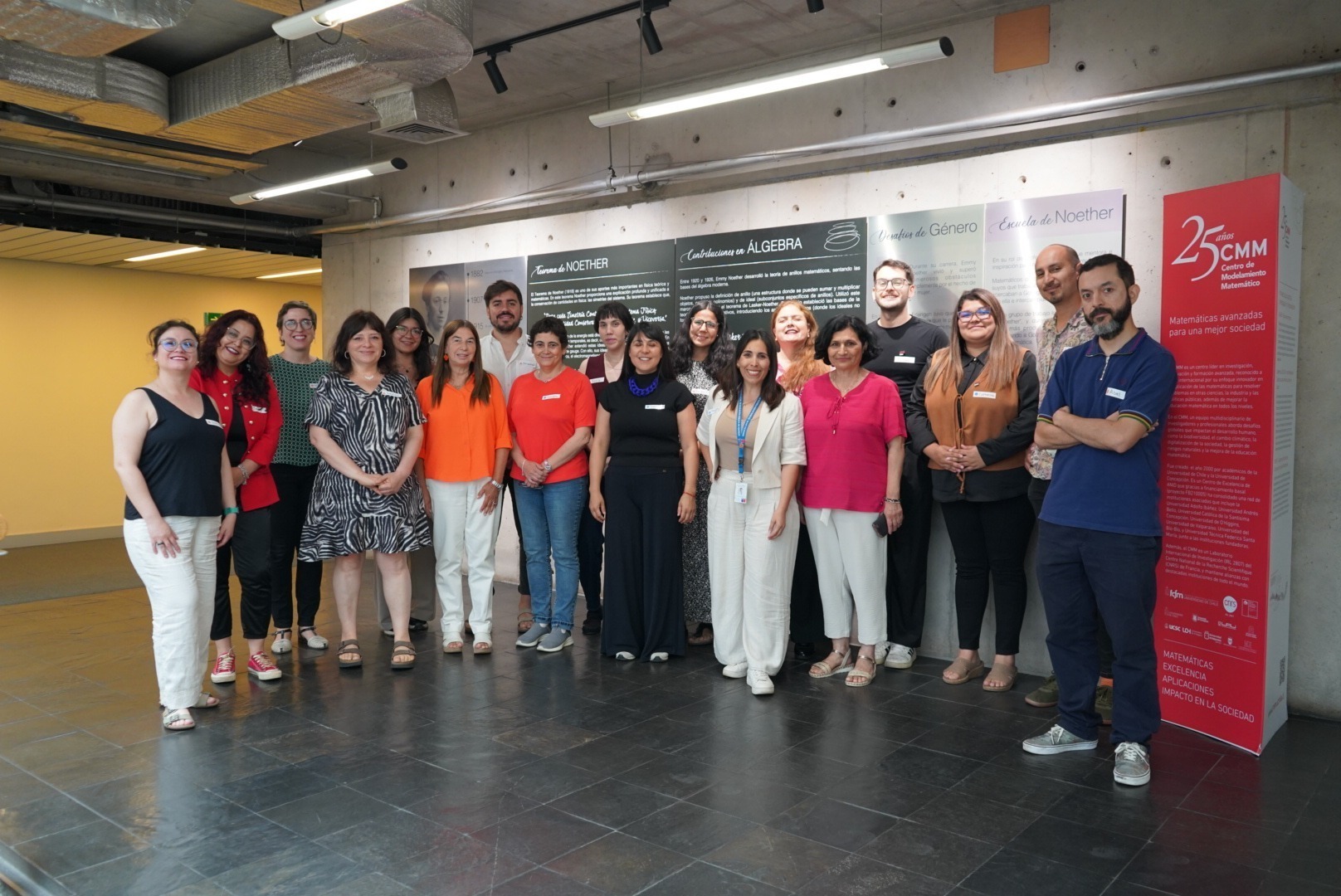
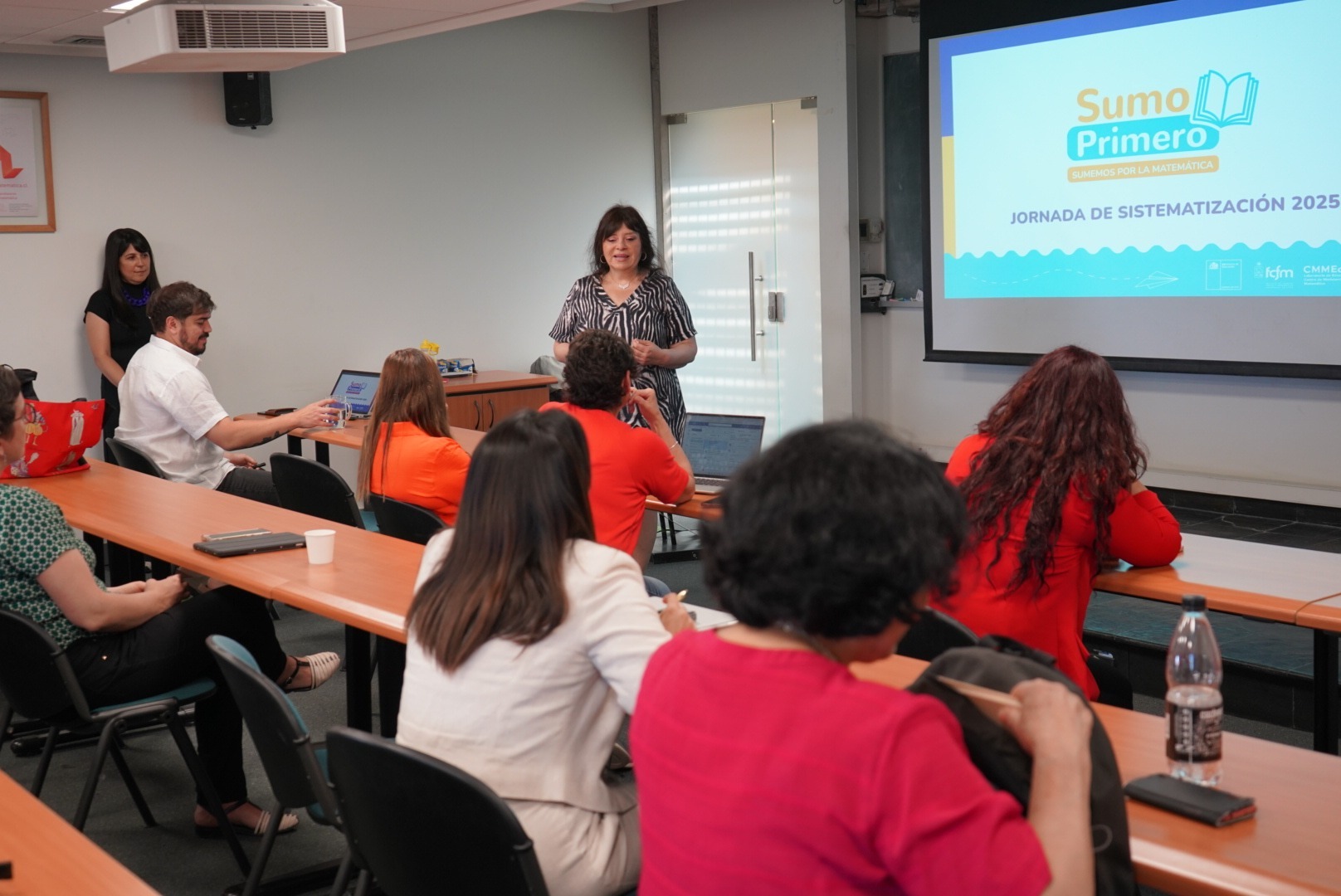
The session was held on Friday, December 19, in the John von Neumann Seminar Room at CMM and gathered approximately 20 education professionals responsible for leading the implementation of the Sumo Primero program in different regions of the country. The meeting served as a strategic space for collective reflection, aimed at systematizing lessons learned, identifying critical bottlenecks, and recognizing opportunities to strengthen the Plan’s implementation model based on territorial experience throughout the year.
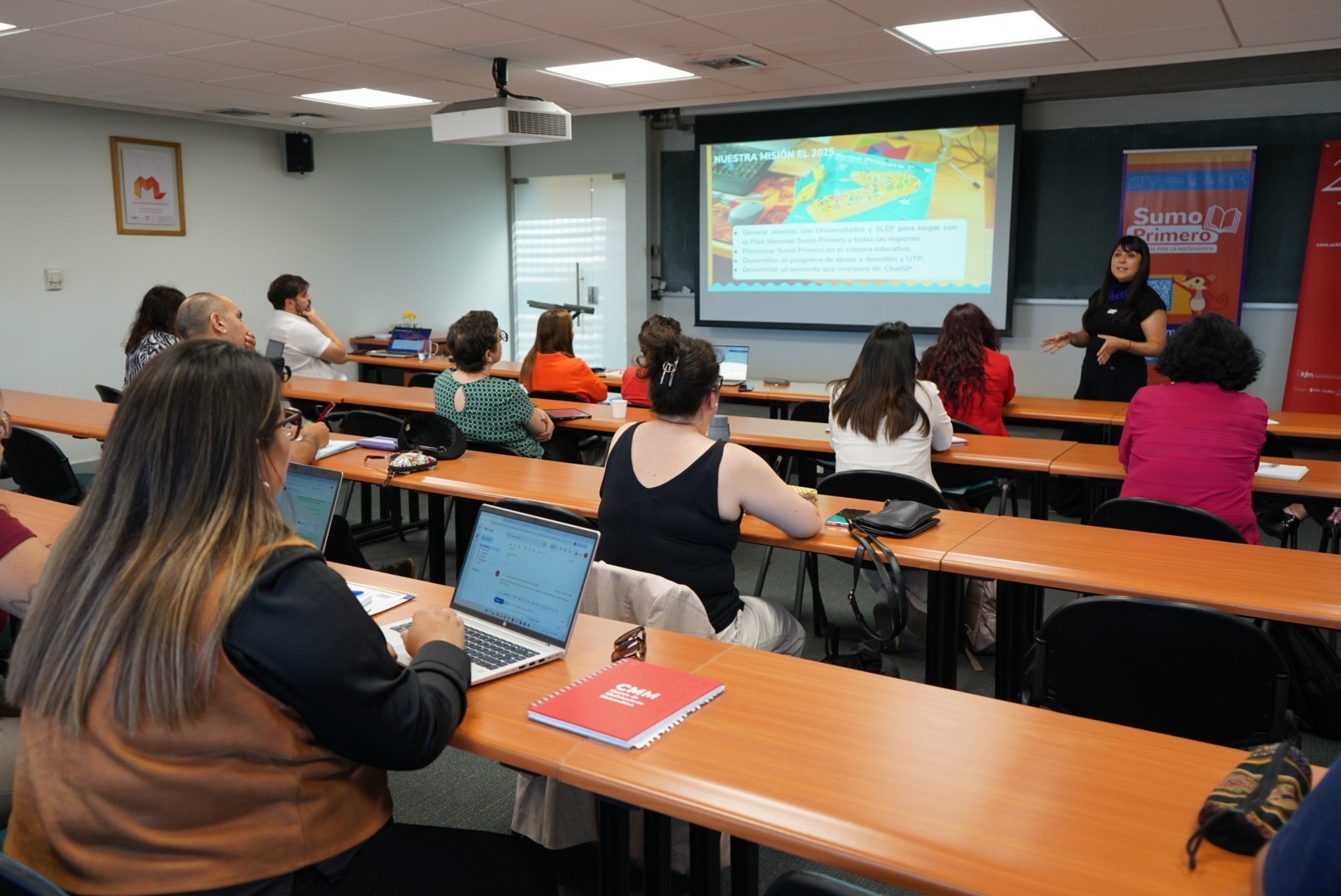
Led by the Ministry of Education in collaboration with CMMEdu, the National Sumo Primero Plan seeks to transform mathematics teaching from Grades 1 through 6. The initiative combines the provision of instructional textbooks, continuous professional development programs for teachers, and digital tools supported by artificial intelligence—through the ChatSP platform—to strengthen mathematical learning from the earliest years of schooling.
CMMEdu: Territorial Coordination and Collaborative Implementation
One of the central conclusions of the session was the recognition of CMMEdu as the Plan’s primary coordinating body, effectively bridging public policy, regional implementation, universities, and classroom practice. Its role has been instrumental in forging strategic alliances with Regional Ministerial Secretariats of Education (Seremis), provincial offices, Local Public Education Services (SLEP), and school communities, enabling a progressive, context-sensitive, and pedagogically grounded implementation process.
“This plan represents a major achievement for our center. We launched the project in early April 2025, and by December we had delivered more than 250 teacher workshops nationwide. This was made possible through the collaborative network we established, which brought together regional universities, Local Services, and the Ministry of Education. The working network we have built is a highly valuable asset for CMM, for the country, and for the advancement of mathematics education in Chile,” stated Prof. Salomé Martínez, Principal Investigator at CMM and Director of CMMEdu.
Voices from the Regions: Lessons from the First Year
Drawing on classroom-level experience, Edwin Calvert, representative from the municipality of Puente Alto, highlighted the pedagogical shift promoted by the Sumo Primero Plan within school communities.
“Many teachers have noted that the use of the textbook has been progressively integrated into classroom practice. This shift in approach has placed students at the center of the learning process, facilitating teaching and learning dynamics across the school community,” he explained.
He also emphasized the Plan’s impact on teacher leadership: “Teachers leading Sumo Primero have become genuine pedagogical leaders, working alongside school leadership teams to drive implementation and foster deeper pedagogical discussions around mathematics.”
From northern Chile, Marllory Riquelme, Technical Pedagogical Support Professional at SLEP Iquique, underscored the collaborative and innovative character of the Plan, particularly its capacity to translate public policy into effective school-level implementation. “For this to be possible, the Ministry of Education entrusted CMM with the responsibility of coordinating alliances with regional secretariats, provincial offices, and SLEPs. This has ensured that the national policy aimed at reactivating mathematics learning effectively reaches schools,” she stated.
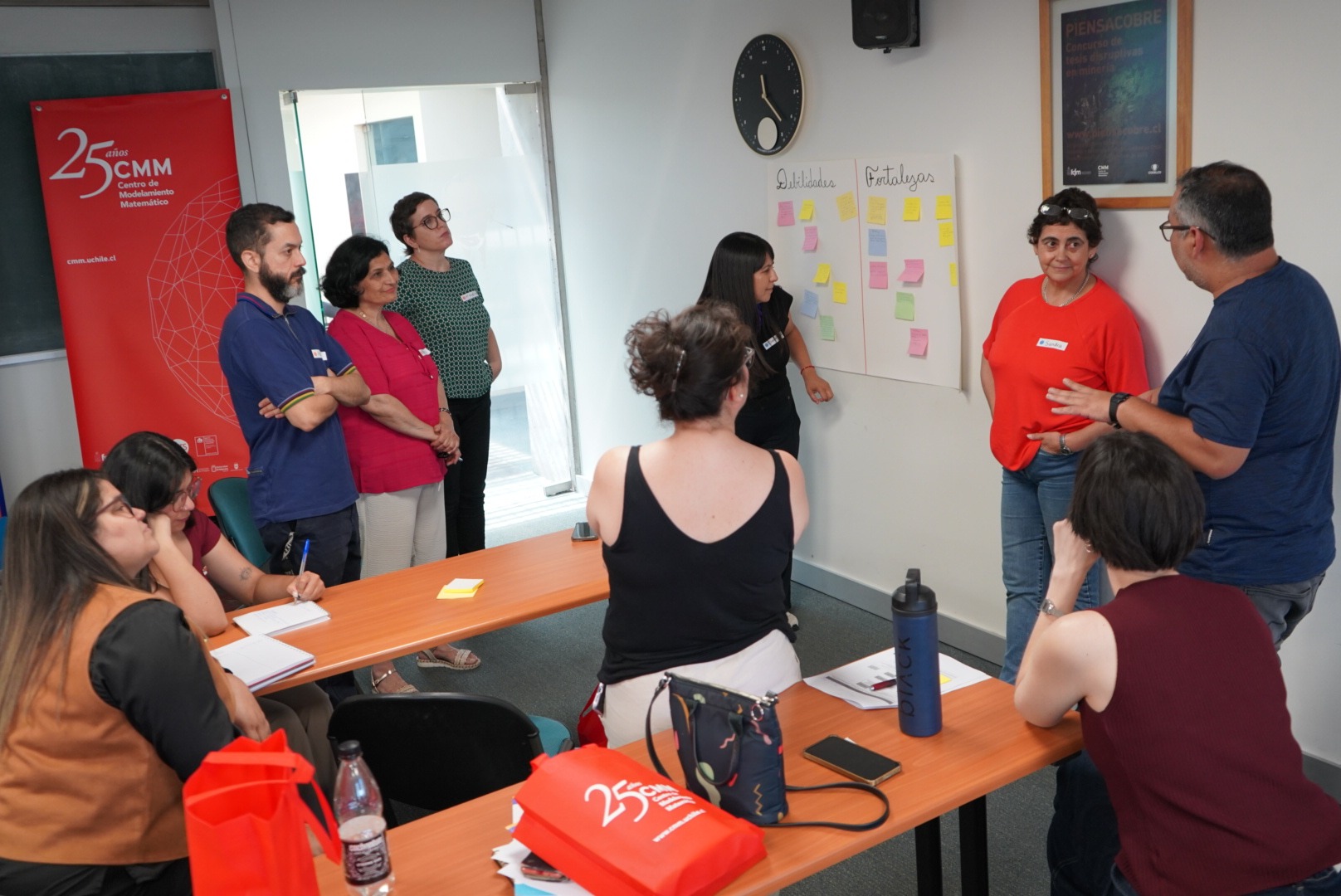
She further highlighted the role of collaboration and innovative tools: “The Sumo Primero Plan creates spaces where teachers can exchange effective practices based on a concrete resource—the textbook. This has enabled educators to approach mathematics teaching in innovative ways, incorporating artificial intelligence as a powerful tool for lesson planning and curriculum monitoring.”
From the Biobío Region, Abel Cisterna, Regional Coordinator of the Sumo Primero Plan at the Regional Ministry of Education, emphasized the strong coordination with CMM while identifying challenges for the program’s next phase. “There has been excellent communication with CMM to advance the initiative in the Biobío Region. However, as a Ministry, we must continue strengthening professional development opportunities for teachers working in the early grades,” he noted.
He added:“Sumo Primero has been key in reshaping the paradigm of mathematics teaching, incorporating more contextualized examples and valuing the diverse strategies students use to reach solutions. The workshops have been fundamental in supporting this transformation”.
María Isabel Baeza, Academic Advisor at the Manquehue School Network, highlighted the impact of partnerships with universities and the program’s national reach.“Collaborating with universities across most regions of the country has been highly positive. It has enabled us to reach more than 3,000 teachers while ensuring high-quality workshops designed to help educators reconnect with the teaching of mathematics” she stated.
National Impact and 2026 Projections
During its first year of implementation, the National Sumo Primero Plan reached more than 1.35 million students, trained 3,068 teachers, delivered 283 professional development events, and coordinated efforts with 19 strategic partners. These figures reflect both its scope and its consolidation as a structural public policy aimed at reactivating mathematics learning nationwide.
The session also provided an opportunity to outline strategic priorities for 2026, focused on strengthening the implementation model, deepening support for school communities, and consolidating the Plan’s impact on mathematics learning outcomes. In this context, CMMEdu was reaffirmed as a key actor in ensuring the coordination, innovation, and long-term sustainability of this national education policy.
This initiative was funded by the ANID Basal Project FB210005 of the Center for Mathematical Modeling.
Written by Cintia Beltrán, CMM Communications.
