
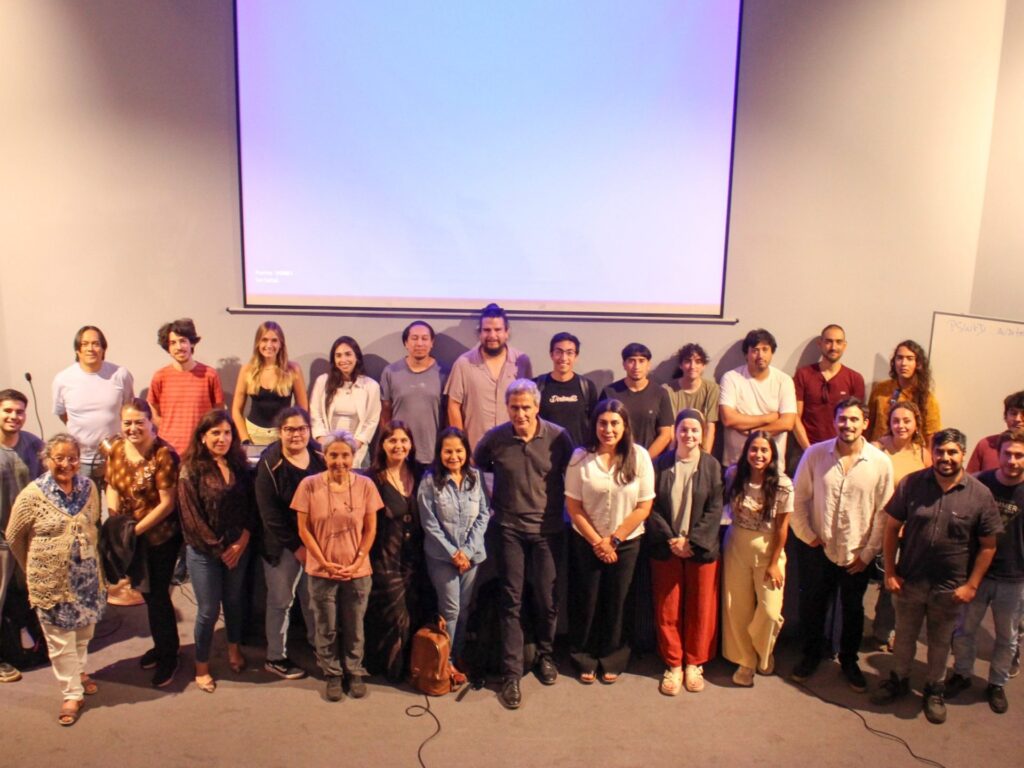
- The activity was organized by the COPAS Coastal Center at the University of Concepción.
On Wednesday, January 14, Prof. Alejandro Maass Sepúlveda, principal investigator at the Center for Mathematical Modeling (CMM) at the University of Chile, gave a keynote lecture entitled “The transcriptional regulation profile in bacterial communities as an environmental sensor” at the Faculty of Natural and Oceanographic Sciences of the University of Concepción (UdeC).
This activity was part of the summer course on data analysis applied to ocean studies, given within the framework of the Austral Summer Institute, XIII ASI, promoted by the Center for Oceanographic Research in the Eastern South Pacific, COPAS Coastal, funded by ANID.
The course aimed to transfer knowledge related to the construction of oceanographic data sets for conducting studies of various kinds. In this context, the professor at the Faculty of Physical and Mathematical Sciences of the University of Chile reported on the work he has done, contributing from mathematics to applied studies such as those promoted by the Tara Ocean Foundation.
In this regard, the 2025 National Prize for Exact Sciences explained some recent findings regarding how the architecture of gene regulation in microorganism communities are very good sensors of the main drivers of a given environment, particularly in ocean samples. “These sensors can shed light on the possible evolutions that microbiomes will undergo, what will change, or whether certain biological functions will be enhanced”, he explained.
Regarding the contribution that mathematics can make to the natural sciences, he explained that “we try to transform the complexity of the phenomenon into numbers that reflect what we call ‘the regulation profile,’ which we believe is a thermometer of certain environmental conditions”.
This information is then simplified to generate indicators that are useful for decision-makers. In this regard, Prof. Maass referred to the challenges of transferring and impacting this knowledge. “There are many ways to imagine a tool, and one that we are trying to imagine has to do with detecting these profiles from satellites. Since biology is robust, we can predict types of profiles and ranges of action for certain plankton behaviors”.
.
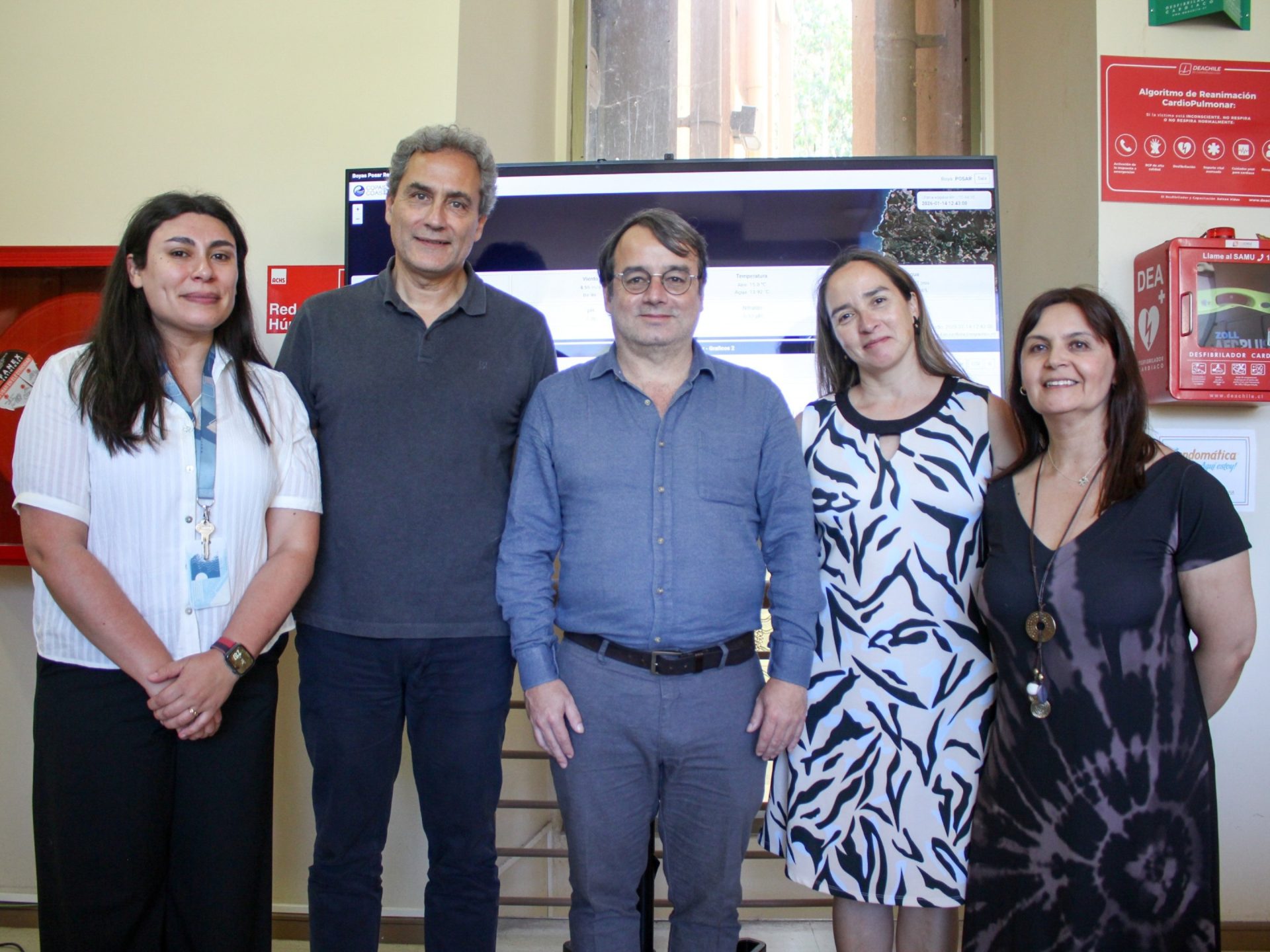
Regarding the invitation to Prof. Maass to give this lecture, the director of the COPAS Coastal Center, Dr. Camila Fernández Ibáñez, commented that “we want to convey to students in the data analysis course this interface between exact science and biology and the applications it can have in conservation”.
In this regard, and given the CMM researcher’s collaboration in the 2021 Tara expedition, the UdeC academic explained.
“So,” explained the UdeC academic, “Alejandro, who collaborated with us extensively on the TARA expedition we did in 2021 and with whom we have been working since then on the use of that data and the genetic sequences we obtained, seemed very relevant to the course topic”.
“It has been a privilege to have the 2025 National Prize for Exact Sciences winner here to talk about this virtuous interaction between mathematics and biology for very specific purposes related to conservation”.
Por Iván R. Tobar Bocaz, Comunicaciones CMM.
