

- Organizers are already projecting growth for the third edition of this summer course, which emphasizes the importance of interdisciplinary collaboration in addressing health challenges.
The second edition of the Summer Course: Mathematical Modeling and Cancer Evolution 2026 was held with great success between January 5 and 10 at the Institute of Complex Systems of Valparaíso (ISCV).
The course, jointly organized by the Center for Mathematical Modeling (CMM) at the University of Chile and The Institute of Cancer Research (ICR) in the United Kingdom, seeks to create a new academic tradition at the intersection of applied mathematics and cancer biology.
The summer school, funded by ANID’s Basal Project FB210005, aimed to provide advanced and practical training in mathematical modeling and data science applied to cancer evolution, ranging from fundamental principles of oncological population genetics to the development of numerical schemes for ordinary differential equations and the study of stochastic branching processes in tumor-immune coevolution. The program was aimed at final-year undergraduate, master’s, and doctoral students.
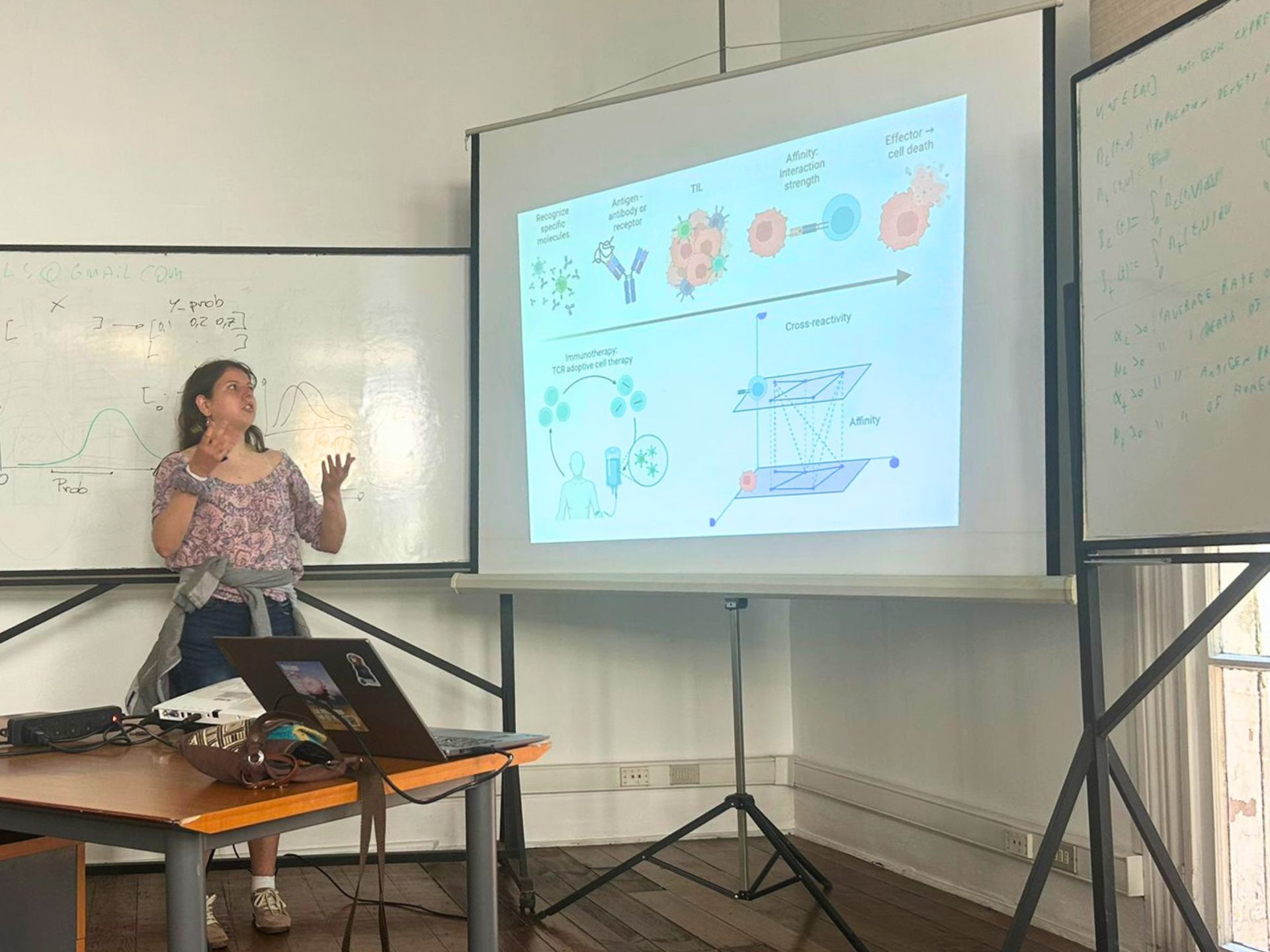
Consolidation and projection of a multidisciplinary school
Prof. Alejandro Maass Sepúlveda, principal investigator at the CMM and co-founder of the course, highlighted the collaborative nature of the initiative, co-organized with Luis Zapata of the ICR, who is the “driving force” behind the project. Dr. Maass explained that the goal is to “begin to create a school that generates a certain tradition”, highlighting the complementarity of his expertise in modeling with Professor Zapata’s evolving vision of cancer.
The school featured a world-class teaching team, including Dr. Alex Di Genova (U. O’Higgins/CMM) and Dr. Giulio Caravagna (U. Trieste), thus emphasizing the synergy between disciplines.
Prof. Maass highlighted that the second edition was “an excellent school in terms of attendance”, with a multidisciplinary composition where “half were people from the fields of mathematics and engineering, and the other half from the field of biology, which allowed for synergy and made it possible to take advantage of everyone’s skills”.
The course focused on how to apply evolutionary theory and mathematical models to real patient data, offering practical sessions in which students learned to develop and analyze complex biological systems.
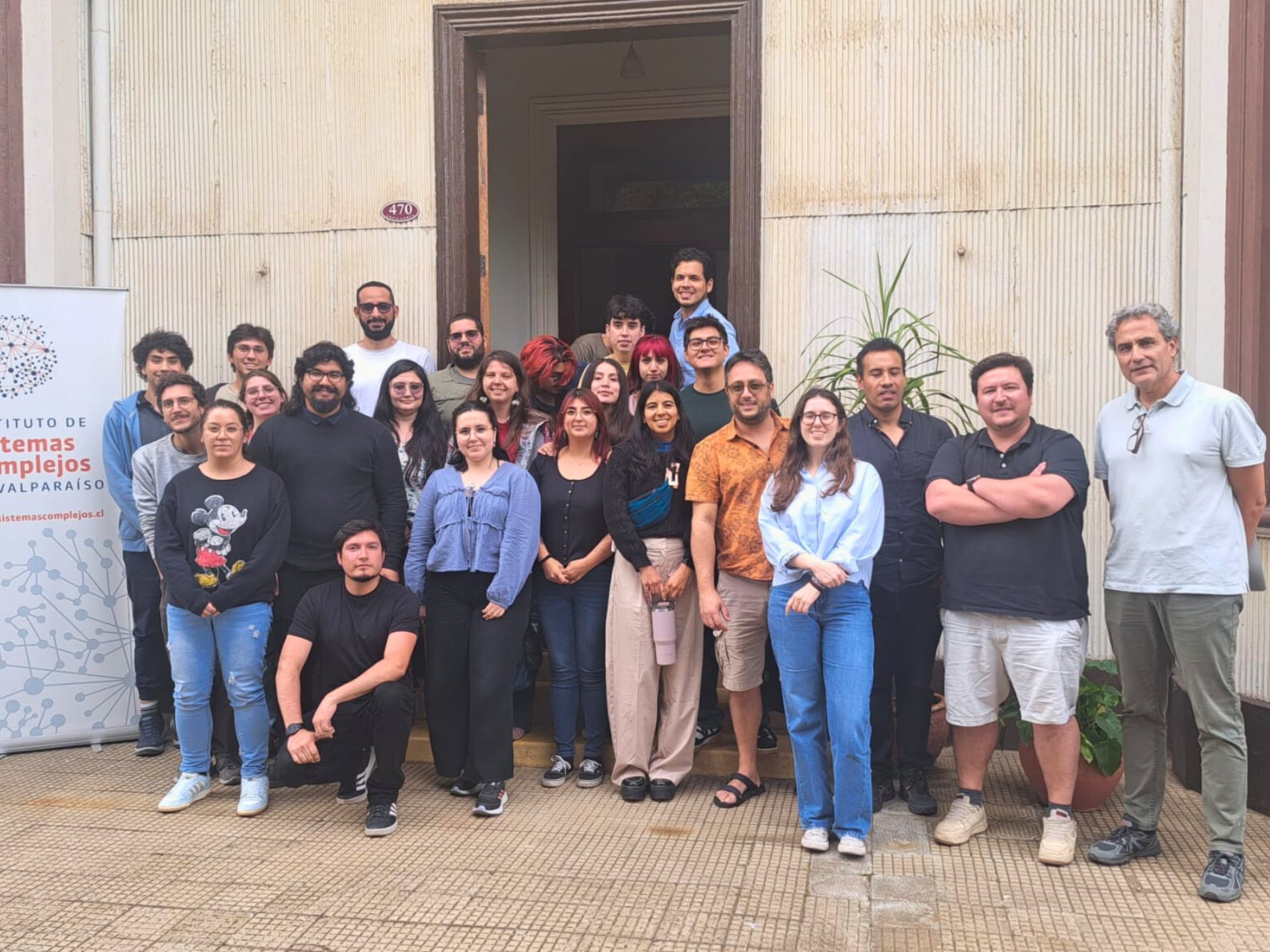
Looking to the future: growth and links with the public system
With two successful editions already under their belts, the CMM and the ICR aim to expand the school’s reach. Recognizing that “this second edition was much better than the first” Prof. Maass projects growth in participation. The goal is to increase capacity from 20 to 30 students and apply for funding from external sources, both national and international, to strengthen the school.
In addition to scientific consolidation, the third edition will seek to expand its impact on the applied and public sectors, a line of work that the CMM considers a “tremendous contribution” to its digital health area, said Prof. Maass. In this regard, he stated that the organization plans to “also invite professionals from the private and public health systems as students”.
By Iván R. Tobar Bocaz, CMM Communications.
