

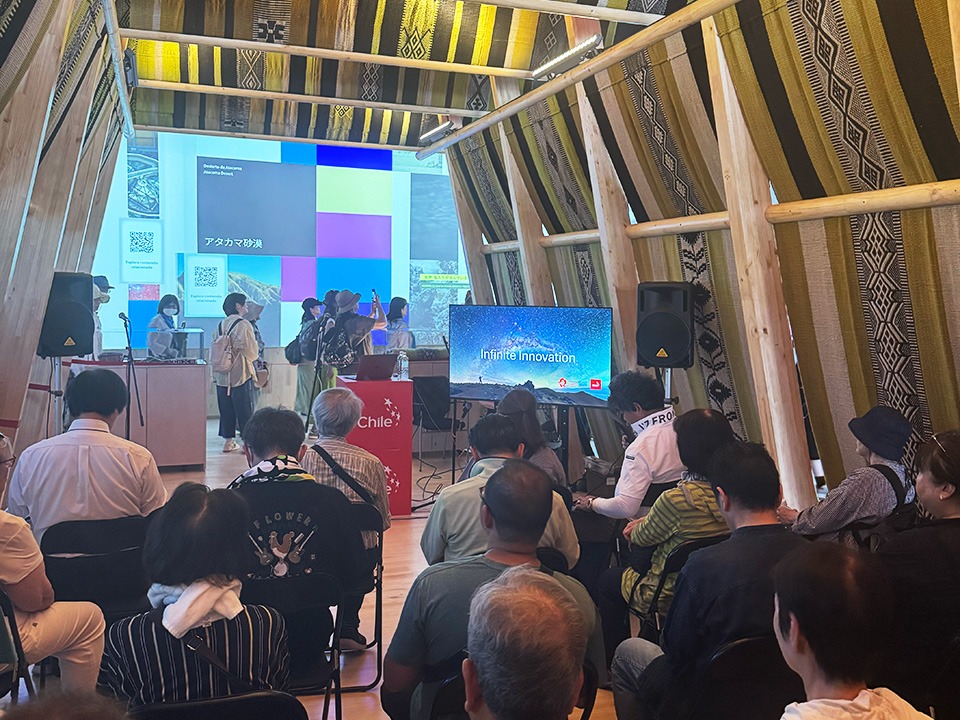
The Chile Pavilion included a presentation by the project’s director and the exhibition of a video about this initiative that brings together the capabilities of the Millennium Institute of Astrophysics (MAS), the Center for Mathematical Modeling (CMM) of the University of Chile, Data Observatory and the University of Concepción.
Last weekend, a visual piece developed within the framework of the project ‘ALeRCE – Automatic Learning for the Rapid Classification of Events’, directed by Guillermo Cabrera Vives, academic of the Faculty of Engineering of the Universidad de Concepción, UdeC, was projected on the screen at the front of the pavilion that brings together the various displays coming from our country at the Expo Osaka 2025.
“The future of astronomy lies in artificial intelligence (AI),” explains Francisco Förster Burón, co-founder of ALeRCE and associate researcher at the Center for Mathematical Modeling (CMM) of the University of Chile, about ALeRCE’s mission. “The amount of data that future telescopes will produce will require AI capabilities that will allow astronomers to analyze raw data with speeds and accuracies that until now would be considered science fiction”.
Expo Osaka 2025 takes place between April 13 and October 13, and is considered a universal exhibition which, in the global context of this type of activities, refers to events dedicated to finding solutions to the fundamental challenges facing humanity, offering a journey into a theme through attractive and engaging activities.
In this context, Chile’s participation is fundamental to strengthen the relationship between the two countries and the sub-theme assigned to our country’s pavilion is ‘Saving Lives’, targeting challenges such as improving public health, ensuring safety through disaster preparedness and risk reduction initiatives, and harmonious coexistence with nature.

In this context, Cabrera Vives, also director of the Data and Artificial Intelligence Center of the UdeC, presented the conference entitled ‘ALeRCE: Real-Time A.I. for the Changing Sky’ in which he explained the objectives and operation of the project he leads and its importance to achieve a better understanding of the universe around us.
In accordance with this, the video ‘Chile: from clear skies to advanced science’, prepared by CMM Communications officer Cristián Murillo and the ALeRCE team, was displayed, which shows the natural advantages of Chile for the development of astronomical science, the progress that this area of knowledge has achieved in our country and the challenges that still remain.





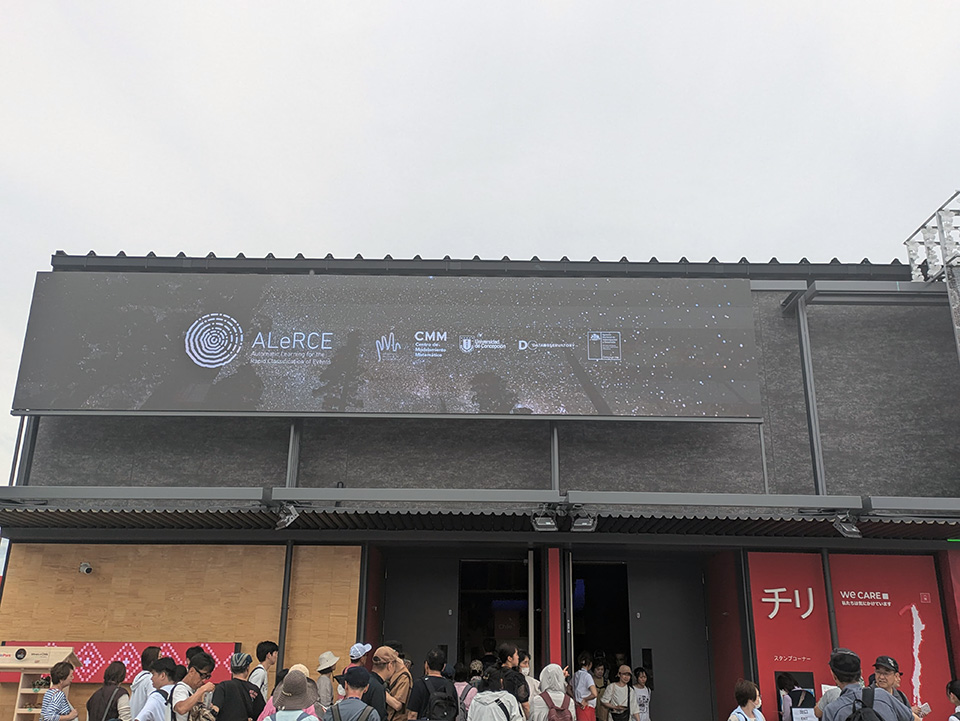
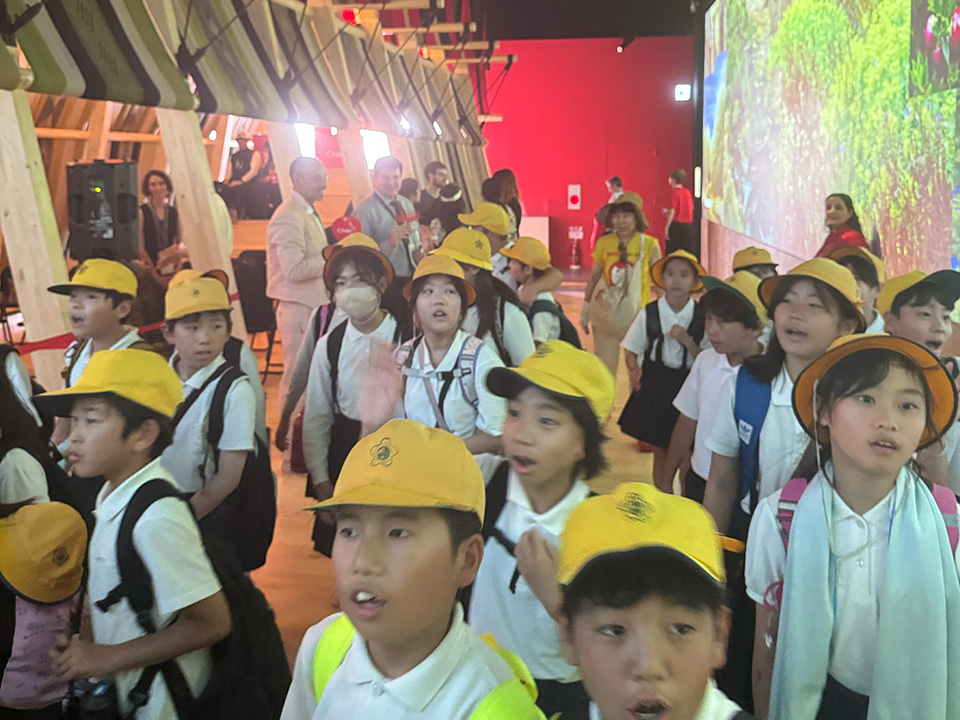
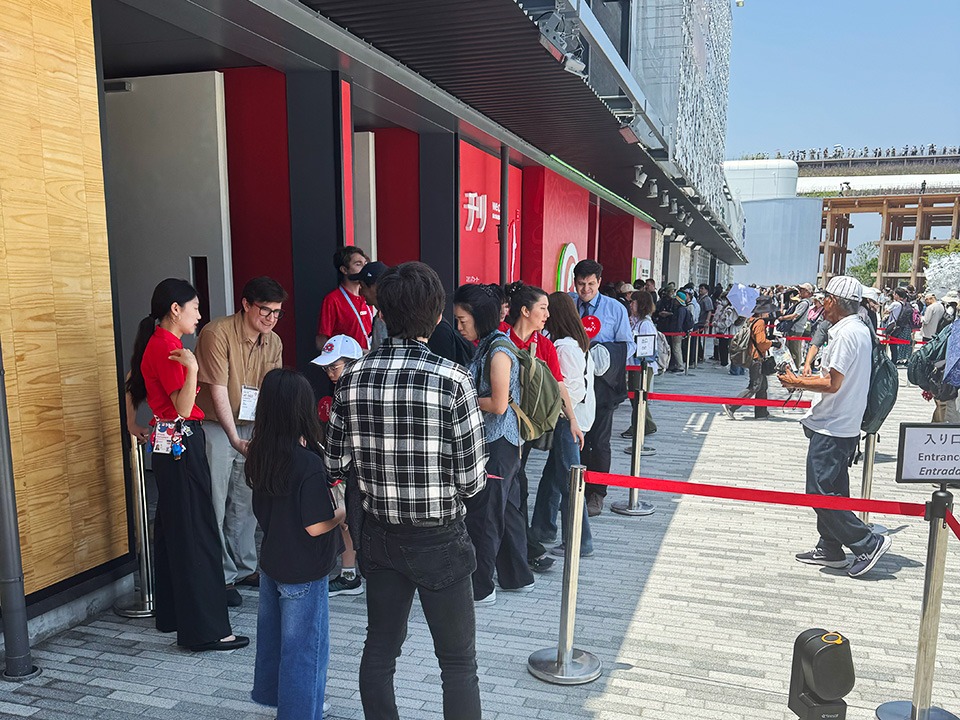

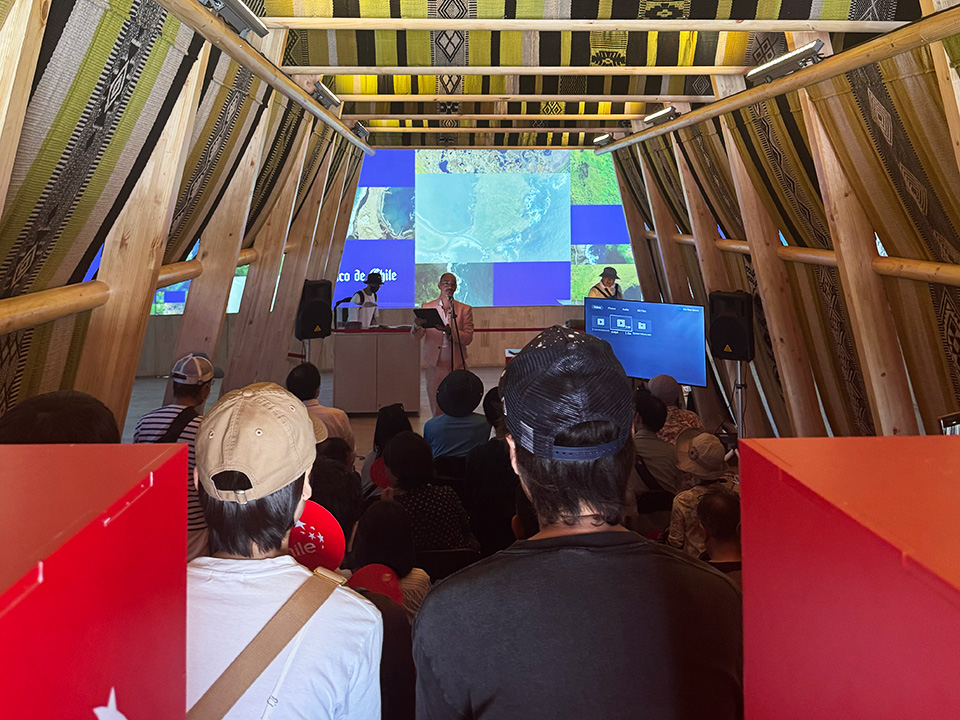

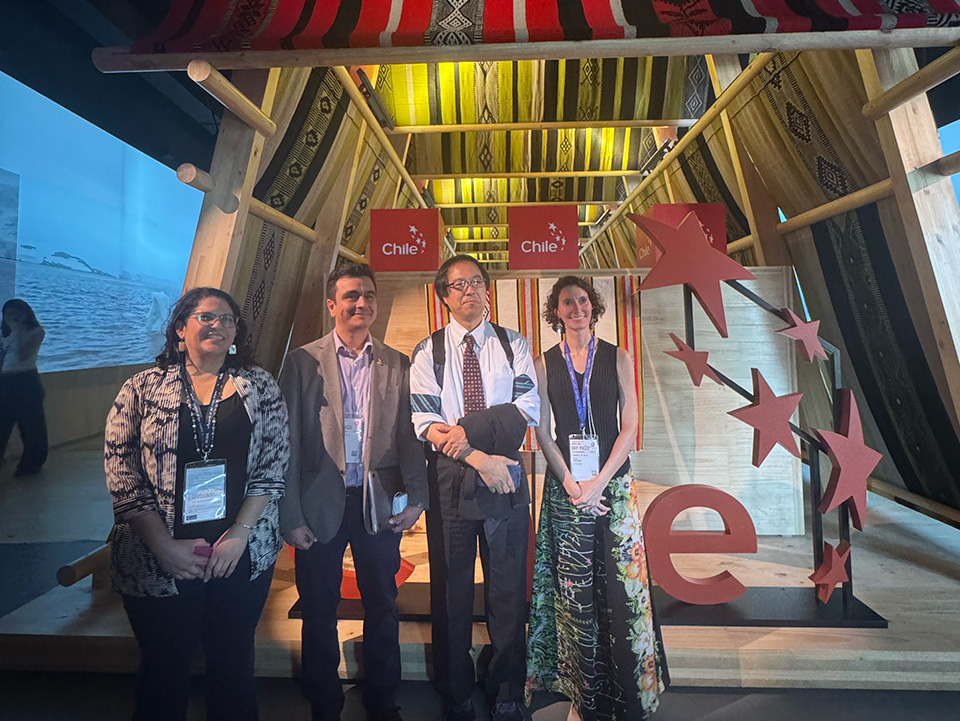
“Thanks to its privileged skies, Chile is home to many of the most important telescopes in the world, which makes it the world capital of astronomy. ALeRCE’s participation in Expo Osaka 2025 allows us to show how we are leading, from Chile, the use of artificial intelligence to explore the universe thanks to the data we have access to”, said Guillermo Cabrera Vives about ALeRCE’s participation in Expo Osaka 2025.
About ALeRCE
ALeRCE (Automatic Learning for the Rapid Classification of Events) is a Chilean-led astronomy broker, a project developed by the Center for Mathematical Modeling (CMM) of the University of Chile and the Millennium Institute of Astrophysics (MAS), in collaboration with the Data Observatory (DO) and the University of Concepción, using cloud infrastructure and machine learning models to bring real-time processed products and services to the astronomical community.
It was launched in January 2019 to lay the foundations for this new science of Big Data applications in astronomy and is the only Chilean project chosen to analyze data from the Vera Rubin Observatory. This observatory, which is preparing to go into operation in northern Chile, houses the Simonyi Survey Telescope –with a primary mirror of 8.4 meters–, with which the LSST (Legacy Survey of Space and Time) sky survey will be carried out, delivering gigantic amounts of data every night. ALeRCE will process the stream of alerts from Rubin, as well as from other large survey telescopes.
By Iván Tobar Bocaz, CMM Communications.
